
The Face You've Been Hiding From God
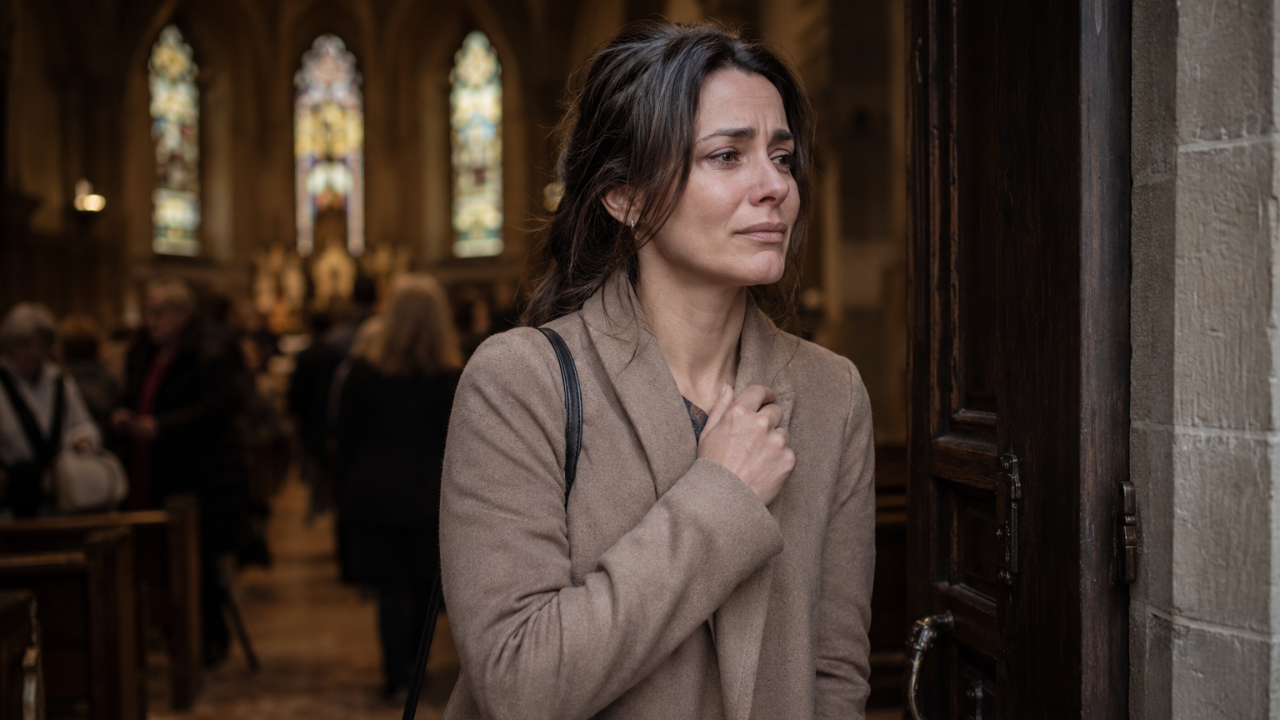
I was almost to the door.
I had made it through the entire service without falling apart, which in that season counted as a real accomplishment. There is a particular arithmetic you learn to do when you are barely holding on. You count the distance to the exit. You measure how many more hands you have to shake. You calculate whether you can get to the car before the thing rising inside you finishes its work.
I did not make it. My eyes filled. It was not sobbing. It was the part right before, the welling up, the moment when your body decides for you.
And someone stopped me and said this:
Why do you have tears welling up? Haven't you dealt with your childhood abuse already? It's been over fifteen years. Remember, Psalm 42 ends in hope in God.
I carried that sentence for years before I understood what had actually happened in that doorway.
LISTEN TO THE EPISODE
This post is the companion to Episode 22 of Lament & Light, part of A Summer of Sorrows. In the episode I go further into Orual's story, into the part of Corrie ten Boom's life almost nobody tells, and into why forgiveness and reconciliation are not the same thing.
WHAT PSALM 42 ACTUALLY SAYS
Most of us know Psalm 42 in fragments. As the deer pants for the water brooks, so my soul pants for You, O God. That is the opening, and it ends up on coffee mugs and wall art, and it is beautiful, and it is true.
Keep reading.
My tears have been my food day and night, while they say to me all day long, Where is your God? (Psalm 42:3, NASB95)
Tears as food. Not a hard afternoon. Not a moment of weakness. Tears as the thing he was living on, day and night, while the people around him asked where his God had gone.
And a few verses later, this:
I will say to God my rock, Why have You forgotten me? Why do I go mourning because of the oppression of the enemy? (Psalm 42:9, NASB95)
Here is the detail I find most pastoral in the entire psalm. The writer asks his own soul the same question twice. Why are you in despair, O my soul. He says it in verse five. He answers himself. And then he says it again in verse eleven.
He preached to himself, and the sermon did not hold. So he preached it again.
Psalm 42 is not a psalm about getting over something. It is a psalm about a man who has to keep talking himself back toward hope because hope keeps sliding off of him.
Which means that in that doorway, a psalm written from inside unresolved weeping was handed to me in order to make me stop weeping.
THE VEIL WAS INTELLIGENCE
To understand why that landed the way it did, you have to know what I had already learned.
I was a child. Something violent happened to someone I loved. And my father looked at me and said, turn it off.
I reached for the light switch.
I want you to sit with that for a second, because I was not being clever and I was not being defiant. I genuinely thought he meant the lamp. My mind reached for the most ordinary possible meaning of the words and put my hand on the wall.
And then I understood. He meant my face. He meant the water coming out of my eyes, as though it were a fixture in the room that someone had left running.
In that house, tears did not bring relief. Tears brought escalation. And later, in my marriage, the same lesson was taught by a different teacher with the same result, which is that I became extraordinarily good at not crying.
It took me years and several safe people to be able to say the next part out loud.
What I did was not weakness. It was not faithlessness. It was not evidence that I was fake or performing or fundamentally dishonest, which is what I later came to believe about myself.
It was intelligence.
A child who learns to stop crying in a house where crying costs her something has done exactly what she needed to do to survive that house. Her body did the math correctly. It identified a threat, found a response that reduced the threat, and made that response automatic so she would not have to think about it in the moment. That is not brokenness. That is a nervous system doing precisely what God designed it to do, inside an environment it was never designed for.
THE WOMAN WHO WORE A VEIL
C.S. Lewis considered Till We Have Faces the best thing he ever wrote. It is also his least read, which probably tells us something about what we prefer from him.
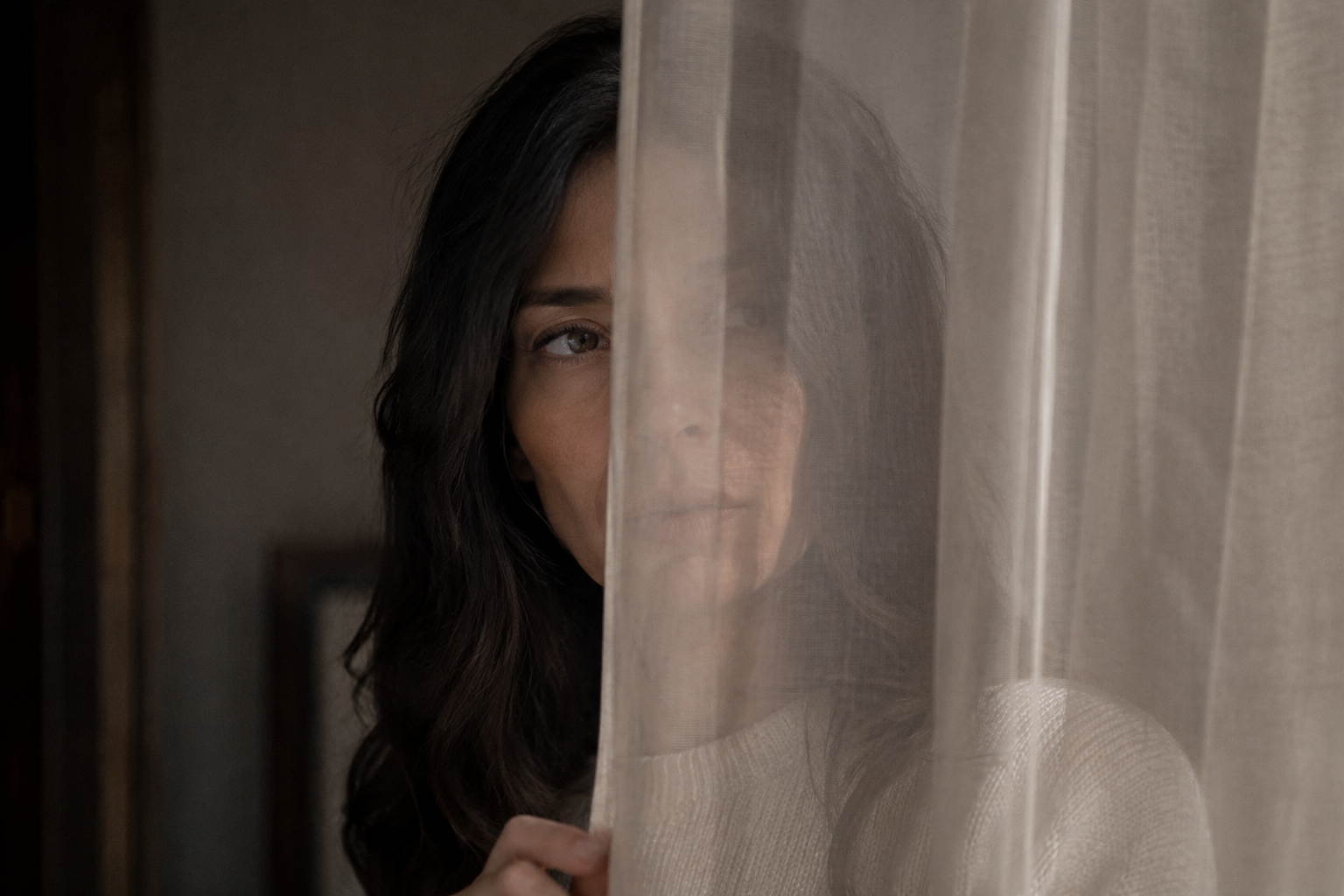
It is narrated by Orual, the plain older sister, the one nobody looked at twice. She begins wearing a veil for practical reasons. Then she becomes queen, and the veil becomes permanent, and she never uncovers her face in public again for the rest of her life.
Over time something happens that I find almost unbearable. The veil stops being something she wears and becomes something she is. People build stories around it. Some believe she is hiding terrible beauty. Others are certain she is hiding something monstrous. Nobody knows, and that is the point. As long as no one can see her, no one can decide anything about her that she has not decided first.
The reason she gives is her face. That reason is true. It is not the real one.
The whole novel is her complaint against the gods, and at the end she is made to read it aloud. What she discovers as she reads is that her careful, reasoned argument was never the real complaint. Underneath it were a few raw lines she had been repeating without knowing it, and those were the true thing, and they had been there the entire time.
Lewis gives her the sentence that names the book. Until we have real faces, she realizes, the gods cannot meet us face to face. Not because they are withholding. Because a veiled face cannot receive an answer it will not look at.
I want to name the difference between Orual and me, because I do not want you to hear our stories as the same story. Her hiding grew from the inside out. It came from pride and control and a love that consumed the people it was aimed at. Her veil was, in the end, a thing she chose.
Mine grew from the outside in. It was installed. I was a child, and I adapted.
But this is where the two stories rejoin, and it is the thing I most want you to carry. What began in me as protection became something I did to myself long after the danger had passed. Nobody was standing over me anymore. Nobody had to. I had taken over the job.
WHY THE PEOPLE AROUND YOU SHAPE WHAT YOU BELIEVE ABOUT GOD
You learn what love is before you have any words for it.
You learn whether the world is safe by whether the arms that held you were safe. You learn what it means to be attended to by whether anyone came when you cried. You learn what a father is from the father you were given, and all of this forms in the part of you that exists before language, which means you cannot argue with it later. It was never made out of arguments in the first place.
Then you meet God and you are handed words about Him. Father. Faithful. Refuge. Compassionate.
And without deciding to, you lay the template you already have over the top of those words.
Here is the part that undid me when I finally understood it. The same voices telling me to hope in God, to trust God, to pray about it, to have more faith, were themselves operating out of fear and control. Their words said one thing and their hands said something else entirely.
More is caught than taught. Always.
So I was handed the words of a good Father by people whose hands told me something different, and my body believed the hands. And then I spent years trying to fix a body-level belief with a head-level tool, concluded that the problem was that I did not believe hard enough, and drove myself into scrupulosity, the obsessive drive to reach spiritual perfection through religious effort. It is a prison that looks like devotion.
Christ-centered psychology as a field has understood for decades that our earliest relationships form the template we bring to God, and that this template is held in the body rather than the intellect. There is now a newer field of study called neurotheology, examining what actually happens in the brain and nervous system during prayer, worship, and belief.
I want to be careful how I say this next part, because it matters. This is not the world correcting Scripture. This is science arriving late to something Scripture said a very long time ago.
HE KNOWS OUR FRAME
The Lord is compassionate and gracious, slow to anger and abounding in lovingkindness. Just as a father has compassion on his children, so the Lord has compassion on those who fear Him. For He Himself knows our frame; He is mindful that we are but dust. (Psalm 103:8, 13-14, NASB95)
He knows our frame. The word is the one you would use for something formed, something shaped, the way a potter shapes a vessel and therefore knows exactly where it is thin.
God is not surprised by your limits. He is not disappointed to discover them. He formed them. He knows what you are made of because He is the one who made you out of it.
And He is mindful that we are but dust, which means He factors it in. Your history is not an inconvenience He is working around. Your nervous system is not a spiritual failure. The fact that your body still reacts to a raised voice thirty years after the raised voices stopped is not evidence that you have not dealt with it. It is evidence that you are dust, and He already knew that, and He has never once required you to be anything else.
Then look at what comes right before it. Slow to anger.
The people at that door could not stay with me for fifteen years. They ran out. And I took their running out as information about God.
But God is not measured by their stamina. He does not get flustered. He does not tire of a sorrow that outlasts other people's patience. He is not standing at a threshold somewhere waiting for you to compose yourself before He will deal with you.
He is not like us at all. That is the good news.
WHO GETS YOUR FACE
I have to say the hard part, because without it this could hurt you.
Stop hiding is not the instruction. Unveiling in front of an unsafe person is not courage. It is re-injury.
There are seasons and circumstances and people where the right and wise and faithful thing is to keep your face covered. That is not fear. That is discernment, and you are allowed to trust it.
Unsafe rarely announces itself, but there are patterns:
- Someone who rushes you toward hope, not because hope is wrong, but because your sorrow is making them uncomfortable and the rushing is for them.
- Someone who hands you a verse instead of a chair. Scripture is not the problem. Scripture handed to you instead of presence is a way of leaving the room without getting up.
- Someone who treats therapy, psychology, and the body's involvement in suffering as a threat to your faith rather than part of how God made you.
On that last one, I want to be both gracious and honest. There is a stream of teaching, sometimes called nouthetic or biblical counseling, that holds Scripture alone is sufficient for every kind of care a person could need, and treats psychology as worldly at best. Many people inside that framework love the Lord more than I can measure and are trying sincerely to be faithful. Their concern did not come from nowhere, because there are secular frameworks that do teach things contrary to Scripture.
But a framework that cannot account for the body cannot hold a woman whose body is carrying what mine was carrying. It does not have anywhere to put her.
So if you have sat across from someone like that and come away feeling like a spiritual failure, keep this: when someone cannot hold your suffering, that is information about their framework. It is not a verdict on your faith.

WHAT SAFE ACTUALLY LOOKS LIKE
About five years ago, a friend told me it was okay to cry.
That is the whole thing. There was no technique and no framework. She did not flinch, she did not fix it, she did not reach for a verse, and she stayed in the room while it was happening.
Then it happened with someone else. And a therapist. And another friend. Over and over, in different rooms, the same unremarkable message: nothing bad happened when I cried in front of them.
That is what undoes it. Not a decision. Repetition. A body that learned something in a thousand small moments has to unlearn it in a thousand small moments, and there is no way to skip to the end.
And here is the honest part, because I am not going to give you a testimony with the difficult section edited out. I still apologize when I cry. I am sitting in safe rooms with people who have proven themselves over years, and my mouth still says sorry before my brain catches it.
Thirty years does not come off in five. I have decided that this is not evidence of failure. It is evidence of how deep it went, and of how patient God has been with the pace of it.
THE LIGHT SWITCH
I think about that little girl with her hand on the wall more often than I expect to.
She thought she was being asked to turn off a lamp. She was being asked to turn off her face.
So here is what I want to say to her, and to you.
God does not require the veil. He never did. Not in any season, not on any Sunday. Whatever you were taught in the doorway of a church, it did not come from Him.
Not everyone has earned your face. That is wisdom, not fear. You are allowed to be slow about it. You are allowed to give someone a small true thing and watch what they do with it before you give them a larger one.
And some people have earned it. Maybe not many. Maybe one.
Start with the one.
STORY ENGAGEMENT QUESTION
What is the complaint you have not been able to bring to God, and who in your life has actually earned the right to hear it?
Thus far the Lord has helped us. (1 Samuel 7:12)
Subscribe to Notes from the In Between
A quiet place for the long middle.
Short reflections, prayers, and healing words for those living between grief and glory.

For the woman in the middle of something hard.
Lament & Light is a podcast for the Christian woman who is still believing, still showing up, and still carrying more than anyone around her knows. Honest faith. Unhurried conversations. No platitudes.
Author

Paris Byrum
Author
Paris Byrum is a spiritual mentor and trauma-informed soul care guide who helps weary hearts heal through biblical wisdom, sacred presence, and soul-deep formation.
Recent Posts