
Reflections
Guiding hearts for spiritual formation through suffering
What Happens When You Finally Get Somewhere Safe?

There is a particular kind of woman who cannot sit still, and she is almost never the woman anyone worries about. She is the one who shows up. She is the one holding the calendar, the meal train, the prayer chain, the carpool. If you asked her whether she was tired, she would say yes and then change the subject, because the tiredness is not interesting to her. It is simply the weather she lives in.
What almost nobody says out loud, including her, is that the moving is doing something. It is not only productivity. It is protection. As long as she keeps going, the things she has not had room to feel stay where she put them.
Would you rather listen to this episode instead? Listen to episode 23 now.
REST IS NOT ALWAYS THE GIFT WE ASSUME IT IS
We talk about rest in Christian spaces as though it were universally welcome, as though the only obstacle were a culture that will not let us slow down. For some women that is true. For a great many others, rest is not the reward at the end of th...
What to Do When You Can't Pray — 6 Practices for the Wall
What to Do When You Don't Know How to Pray Anymore
— ✦ —
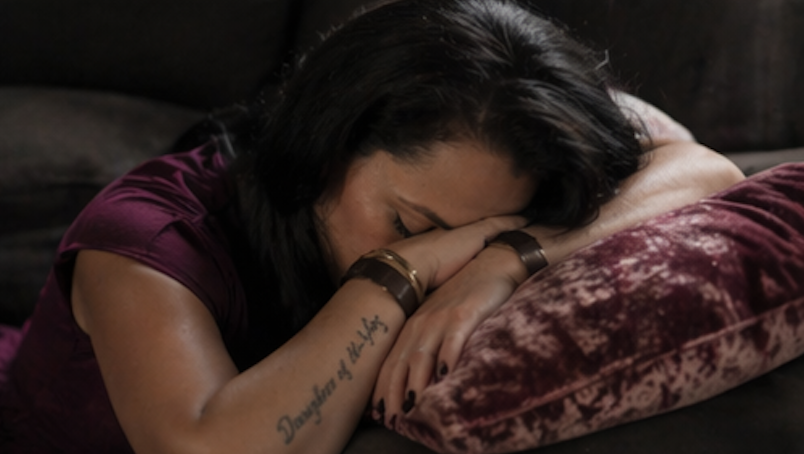
There is a particular kind of grief that comes with losing the ability to pray.
Not a sudden loss — not the kind that comes from one devastating moment. The slow kind. The kind where you sit down to pray one morning and notice, with a faint alarm, that the words are not there. And then you sit down the next morning and notice the same thing. And then a week passes, and a month, and what was once as natural as breathing has become something you approach with dread — or stop approaching at all.
If you are in that place right now, I want to begin by saying something important:
The inability to pray in the way you once did is not evidence that prayer has stopped being real. It may be evidence that God is inviting you into a different kind of prayer entirely.
Want to listen instead of read?
The contemplative tradition — the stream of Christian spirituality that takes seriously the interior life and the long, often painful...
John of the Cross & the Dark Night — What the Church Forgot

What John of the Cross Knew That the Modern Church Forgot
— ✦ —
I found them when I was drowning.
Not dramatically — the way we picture drowning from the outside. Quietly. The way a person drowns when they have been treading water for so long that the effort itself becomes the thing that exhausts them. I was in the darkest season of my life — shunned by a church community I had loved as family, my faith coming apart at every seam I had stitched together, unable to pray in any way that felt coherent, certain that what was happening to me was evidence of something uniquely, specifically wrong with me.
And then I found them.
The ancient witnesses. The ones who had been here before me — in the darkness, in the silence, in the long season where God felt absent and prayer felt like speaking into a void. They had not just survived it. They had written about it. With honesty and precision and a theological depth that the modern church has largely stopped passing on.
Want to listen ins...
First Half Faith — Why God Doesn't Leave You There
First Half Faith and Why God Doesn't Leave You There
— ✦ —
There came a point in my life where what I had done for the first eight years of my Christian walk no longer worked in my suffering.
Not because my faith was wrong. Not because God had abandoned me. Not because I had done something to disqualify myself from His grace.
But because the container I had been given — the spirituality I had been formed in — was not built for what I was now carrying.
And nobody told me there was another one coming.
If you have been in a season where the faith that once sustained you has stopped producing what it used to — where the disciplines feel hollow, the answers feel insufficient, and the God you thought you knew seems to have gone quiet — this post is for you.
Want to listen instead of read?
Because what you are experiencing may not be a failure of faith. It may be an invitation into a deeper one.
— ✦ —
The Faith That Got You Here — And Why It Mattered
The first half of fait...
Six Types of Walls — Burnout vs Dark Night of the Soul
Six Types of Walls — And Why It Matters Which One You're In
— ✦ —
Not all darkness is the same.
And one of the most disorienting — and quietly harmful — things that happens when faith stops working is that we apply the wrong remedy. We treat a dark night of the soul like burnout, and wonder why rest is not helping. We treat a faith crisis like a personal crisis, and wonder why our circumstances improving does not make the questions go away. We treat a blowout like spiritual dryness, and wonder why discipline is making things worse.
The wall has different faces. And knowing which face you are looking at is the beginning of knowing how to stay.
Want to listen instead of read?
This post is a companion to Episode 2 of the Through the Wall podcast series. If you have not yet listened, you are welcome to start there — or to begin here, and let this be your map.
— ✦ —
Why Finding Your Location Changes Everything
When you are at the wall — when faith feels dry, distant, or broke...
When Faith Stops Working — The Christian Dark Night of the Soul
When Faith Stops Working the Way It Used To
— ✦ —
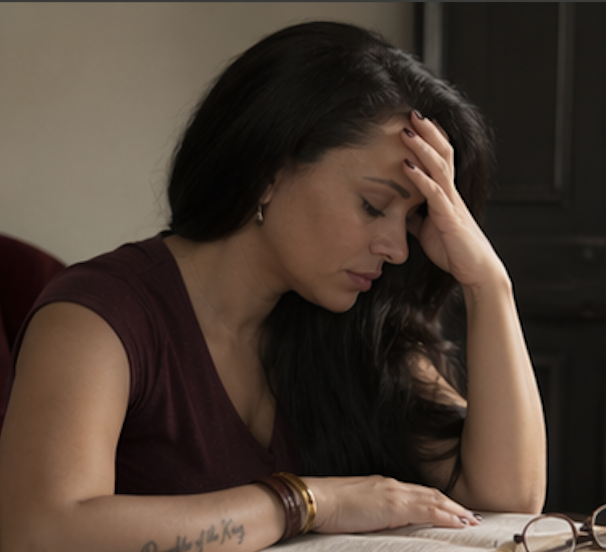
There is a particular kind of exhaustion that does not have a name in most Christian circles.
It is not burnout, exactly — though exhaustion is part of it. It is not depression, though the weight of it can feel indistinguishable. It is not a crisis of belief, though you may have begun to wonder if that is what it is.
It is the experience of waking up one day and realizing that faith — the faith you have practiced, built, tended, and sometimes fought for — has stopped producing what it once did.
Want to listen instead of read?
Prayer feels hollow. Scripture feels distant. Worship feels like going through motions you no longer understand. And God, who once felt present and close, now feels somewhere behind a door that will not open no matter how many times you knock.
If you have found your way to this page, you may be living in that space right now. Or you may be watching someone you love live there. Or you may have been ther...
Raised in Violence, Rising in Faith: A Story of Christian Trauma Recovery and Hope
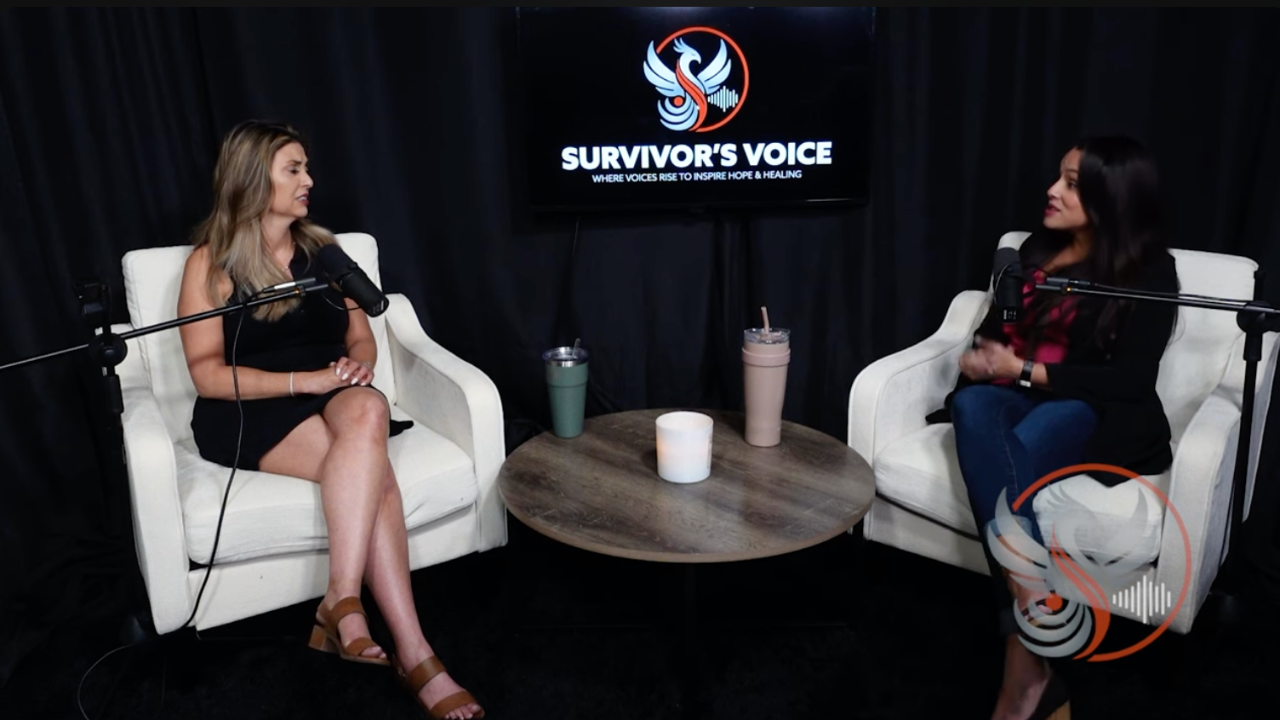
Raised in Violence, Rising in Faith: A Story of Christian Trauma Recovery and Hope
There are stories we bury because telling them feels like reopening a wound.
And then there are stories that, when spoken, become a doorway—not only for us, but for someone else who is still living in the silence.
Recently, I shared my story publicly for the first time in a long-form setting. Not because I am “fully healed.” Not because everything is resolved. But because I know what it feels like to wonder how to navigate grief as a Christian when your story includes abuse, betrayal, and loss.
And I know what it means to need Christian grief support that does not rush resurrection.
This is my story of Christian trauma recovery—and faith-based healing that did not erase grief, but met me inside it.
When Your First Memories Are Survival
I was born into violence.
My earliest memories include instability, neglect, and fear. As a child, I learned how to read the emotional temperature of a room before...
Embodied Spiritual Formation: Healing Faith in the Body After Grief

Embodied Spiritual Formation: Healing Faith in the Body After Grief
To the wounded Christian grieving alone—
There is a particular kind of loneliness that comes when suffering outpaces language.
You still believe. You still love God. You still show up to church, open Scripture, whisper prayers when you can. And yet, your body tells a different story. Your chest tightens when you try to pray. Your shoulders stay raised, braced for impact. Your nervous system never quite settles, even when the words of faith are familiar.
Many faithful believers live here—caught between sincere belief and embodied exhaustion. We know what is true, but we do not feel safe enough to rest in it. This is not a failure of faith. It is a signal that grief has lodged itself somewhere deeper than cognition.
This is where embodied spiritual formation becomes not optional, but essential.
Why Faith Cannot Remain Only in the Mind
Embodied Spiritual Formation for Christian Grief Recovery
Christian formation h...
Sacred Presence and Faith-Based Community

Why So Many Christians Are Seeking Soul Companionship
There is a quiet shift happening in Christianity.
It is not always loud enough to trend online.
It does not always come with public deconstruction stories.
But it is steady.
Many believers are not leaving Jesus.
They are leaving environments where their pain has felt unsafe.
They are searching for Christian grief support that does not rush resurrection.
They are longing for faith-based healing that honors the nervous system.
They are seeking spiritual mentorship that listens before it teaches.
This is not rebellion.
It is hunger for sacred presence.
When the Church Feels Busy but the Soul Feels Alone
An Invitation to Notice What Is Missing
For decades, churches have emphasized right belief, strong doctrine, and faithful service.
These are good gifts.
But many people quietly discovered that information alone does not heal trauma.
Correction alone does not soothe grief.
And busyness does not produce intimacy with God.
When ...
When Questioning God Is Not Unbelief
When Questioning God Is Not Unbelief
Christian grief support in the in-between space between grief and glory
There are questions many believers carry quietly:
Is it sin to question God?
Am I dishonoring Him if I say this hurts?
Why does my church feel unsafe for wrestling?
Why did suppressing doubts eventually fracture my faith?
These are not rebellious questions.
They are human ones.
And they surface most often in the in-between — the long stretch between grief and glory. The space where hope feels fragile, prayers feel unanswered, and faith feels less like victory and more like endurance.
If we are going to talk honestly about Christian grief support, we have to talk about that space.
When Grief and Faith Collide
Suffering does not politely wait until our theology feels tidy.
It interrupts.
It destabilizes.
It exposes the places where our faith-based healing has been more conceptual than embodied.
Scripture is not silent about this collision.
In Lamentations 3, the prop...

For the woman in the middle of something hard.
Lament & Light is a podcast for the Christian woman who is still believing, still showing up, and still carrying more than anyone around her knows. Honest faith. Unhurried conversations. No platitudes.
Author

Paris Byrum
Author
Paris Byrum is a spiritual mentor and trauma-informed soul care guide who helps weary hearts heal through biblical wisdom, sacred presence, and soul-deep formation.
Recent Posts