
The Formation You Didn't Sign Up For
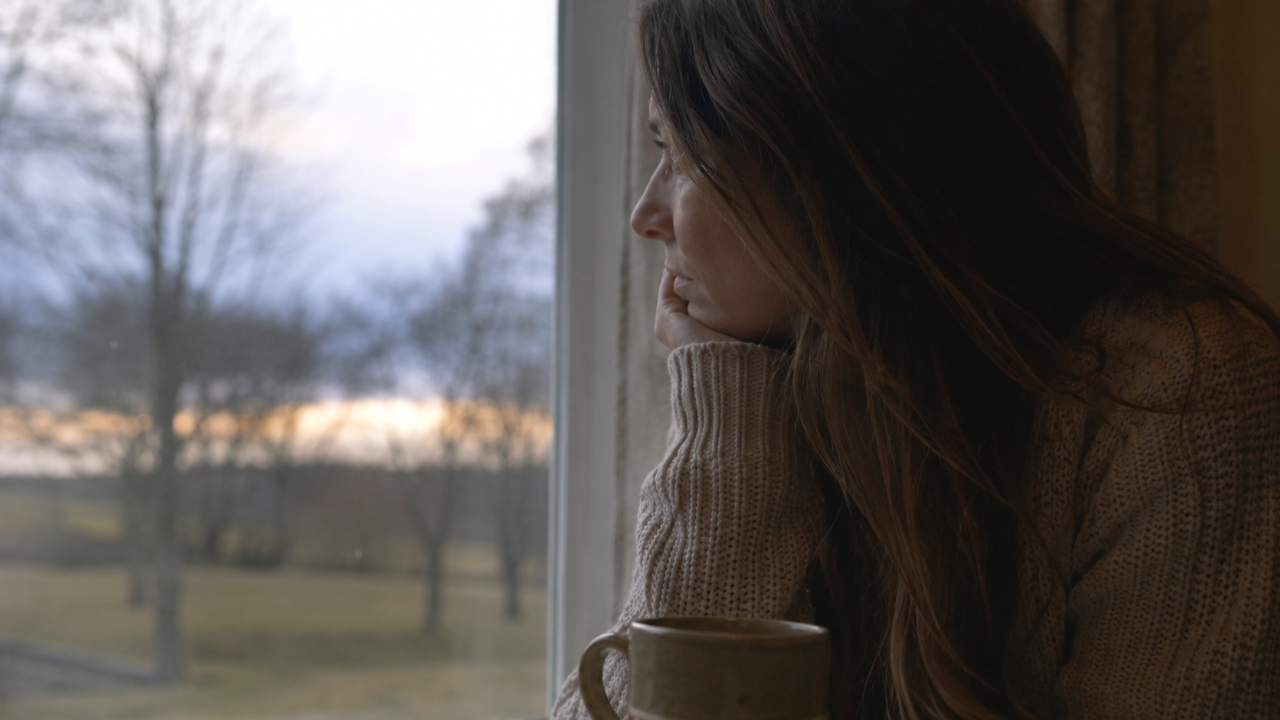
The Formation You Didn't Sign Up For
In Hinds' Feet on High Places, a shepherdess named Much-Afraid sets out on a journey toward the High Places, led by the Shepherd she loves. She expects the journey to be hard. What she does not expect, what nearly undoes her before she has gone any real distance at all, is who she is given to walk with.
Two companions are assigned to her for the climb. Their names are Sorrow and Suffering.
She did not choose them. She would never have chosen them. And for a long stretch of the story, she is convinced that their presence must mean something has gone wrong, that perhaps she has misunderstood the Shepherd, or taken a wrong turn, or that this was never the path after all. It is only much later, when she reaches the place she was being led to, that she understands what Sorrow and Suffering were actually doing the entire time. They were not a detour from her formation. They were the shape it took.
Want to listen instead of read?
WHAT IF THE HARDEST PART ISN'T THE SUFFERING ITSELF?
There is a particular kind of disorientation that comes not from the hard season itself, but from who shows up inside it. The friend who cannot stay close. The family member who says the wrong thing at exactly the wrong moment. The version of yourself you did not know existed until the pressure revealed it, the one who is more afraid, or more impatient, or more exhausted than you ever imagined you could be.
These are not always the things we think to grieve. We expect to grieve the loss itself, the diagnosis, the ending, the thing that broke. We do not expect to also have to make peace with the companions that loss brought with it, the ones we did not choose and cannot seem to send away.
Asaph knew something about this. Psalm 77 opens with a man crying out to God, reaching for Him in the night, and finding nothing reaching back.
"I am so troubled that I cannot speak." (Psalm 77:4, NASB95)
This is not a man without faith. This is a man whose faith has been handed companions he did not ask for, in a season where the ordinary forms of comfort and prayer have stopped working the way they used to. He does not pretend otherwise. He stays in the trouble long enough to let it be true.
WHAT ASAPH DOES WITH WHAT HE CANNOT FEEL
And then, partway through the psalm, something shifts. Not the circumstances. Something underneath them.
"I shall remember the deeds of the Lord; surely I will remember Your wonders of old." (Psalm 77:11, NASB95)
He is not performing faith he does not feel. He is reaching for something he can hold even when feeling has gone quiet, the memory of who God has been, across a longer story than the one currently pressing in on him. This is not denial. It is closer to what Much-Afraid eventually discovers about Sorrow and Suffering. They do not disqualify the journey. They are part of how she is formed for what is at the top of it.
THE SAINTS WHO WROTE FROM INSIDE IT
Anne Steele lived in eighteenth-century England, and her life did not give her what she most wanted. She was engaged once, to a man she loved, and he drowned the day before their wedding. She never married anyone else. For most of her adult life, she lived with chronic physical pain, the kind that does not lift, the kind that becomes a companion you never invited and cannot send away.
She wrote one hundred and forty-four hymns.
Not after the grief resolved. Not once the pain lifted, because it never did. From inside it, year after year, she kept writing, and what she wrote was not triumphant. It was something quieter and, I think, more durable than triumph.
"Father, whate'er of earthly bliss Thy sovereign will denies, accepted at Thy throne of grace, let this petition rise: give me a calm, a thankful heart, from every murmur free." (Anne Steele)
She is not asking for the pain to be removed. She is asking for a calm heart inside a life that is not going to resolve the way she once hoped it would. That is what it sounds like to be formed by companions you did not choose, without pretending they are something other than what they are.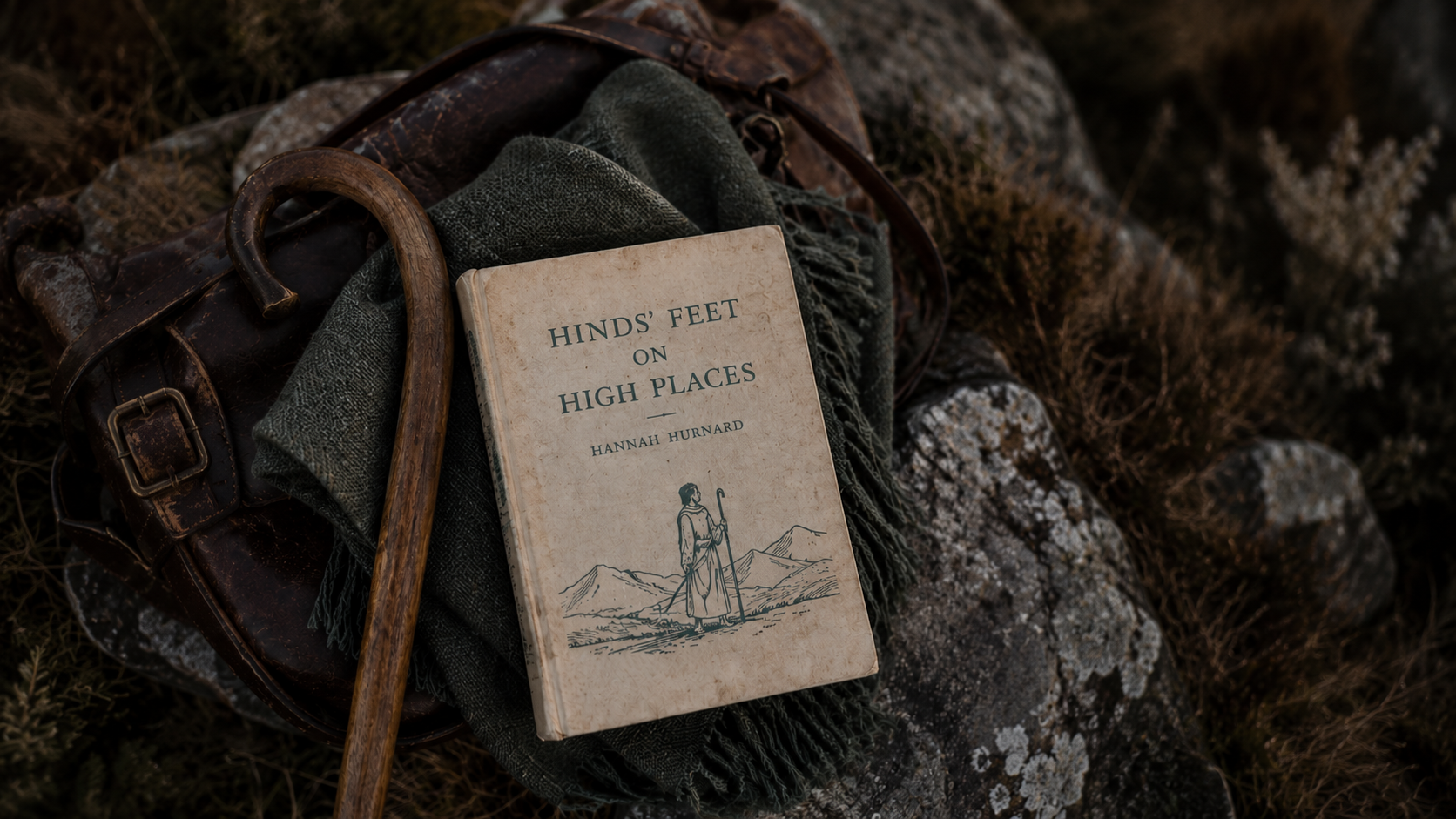
WHY STORIES FORM US
There is a conviction, held by writers and thinkers in the classical and literary tradition, that stories do not just entertain us or even just teach us. They form us. Not by telling us what to think, but by shaping, slowly and almost invisibly, what we are able to recognize when we meet it in our own lives.
This is not the same as saying a story can save us, as though the story itself were the source of redemption. The redemption belongs to God. But the shape of every good story, the pattern of good and evil in real conflict, of something broken being met by something larger than itself, of a journey that costs the traveler something real, trains us to recognize that same shape when it shows up in our own lives. When we have spent years inside stories like Hinds' Feet, or like the Psalms themselves, we are more able to recognize Sorrow and Suffering for what they are when they arrive at our own door, instead of mistaking them for proof that something has gone wrong.
This is part of why, during one of the hardest seasons I have walked through, I found myself reading more fiction than I ever had before. Not as an escape from what I was carrying, but almost the opposite. The stories I read that year, the ones with real grief and real cost and real companions nobody would have chosen, became part of how I kept going. They did not explain my situation to me. They gave me a shape for it. They let me recognize, in the middle of my own unresolved chapter, that I was inside a kind of story that has been told before, that has companions like Sorrow and Suffering in it, and that those companions are not always a sign that the story has gone wrong.
There is an idea, sometimes attributed to those who have studied what sustains people through the hardest seasons a person can face, including literal imprisonment and persecution, that what we have stored in our hearts ahead of time, the hymns, the Scripture, the stories, becomes what we have left when everything else is taken. Not because we planned for the worst, but because what we have absorbed becomes part of us, available to us, in the moment we need it most. Anne Steele's hymns did this for generations of people she never met. The stories I read that year did it for me, in a smaller way, in real time.
THE COMPANION THAT TURNED OUT TO BE FORMATIVE
I think of a particular relationship from that season of my life, a companion I did not choose and would not have asked for, who turned out, over time, to be one of the most formative presences I have ever had. At the time, their presence in my life felt like one more thing I had to carry. Looking back, I can see that they were doing something in me that nothing easier would have done.
This is not a tidy lesson. I am not saying that every hard companion turns out to be a blessing in disguise, or that suffering always has a silver lining waiting at the end of it. That kind of framing tends to ask people to find the point of their pain before they have even finished grieving it, and that is not what this is.
What I am saying is something closer to what Much-Afraid eventually understood. Sorrow and Suffering were not a sign that she had lost her way. They were with her because of where she was being led, and they were forming her for it the entire time, even when she could not feel it, even when she would have chosen, every single day, to walk without them.
IF YOU HAVE COMPANIONS YOU DID NOT CHOOSE
If there is a presence in your life right now, a person, a diagnosis, a fear, a version of yourself you did not ask to meet, that feels like proof something has gone wrong, I want to offer you a different possibility. Not as a guarantee, and not as a way of skipping past how hard this actually is. But as a question worth holding.
What if this companion is not evidence that you have lost the path? What if it is here because of where you are being led, and it is forming you for that, slowly, in ways you will not be able to see until you are further along?
You do not have to like the companion. You do not have to pretend it is welcome. You only have to keep doing what Asaph did, and what Anne Steele did, and what Much-Afraid eventually learned to do. Keep bringing your petition to the throne. Uncleaned. Unresolved. Just: here I am, with what I am carrying.
Subscribe to Notes from the In Between
A quiet place for the long middle.
Short reflections, prayers, and healing words for those living between grief and glory.

For the woman in the middle of something hard.
Lament & Light is a podcast for the Christian woman who is still believing, still showing up, and still carrying more than anyone around her knows. Honest faith. Unhurried conversations. No platitudes.
Author

Paris Byrum
Author
Paris Byrum is a spiritual mentor and trauma-informed soul care guide who helps weary hearts heal through biblical wisdom, sacred presence, and soul-deep formation.
Recent Posts