
John of the Cross & the Dark Night — What the Church Forgot

What John of the Cross Knew That the Modern Church Forgot
— ✦ —
I found them when I was drowning.
Not dramatically — the way we picture drowning from the outside. Quietly. The way a person drowns when they have been treading water for so long that the effort itself becomes the thing that exhausts them. I was in the darkest season of my life — shunned by a church community I had loved as family, my faith coming apart at every seam I had stitched together, unable to pray in any way that felt coherent, certain that what was happening to me was evidence of something uniquely, specifically wrong with me.
And then I found them.
The ancient witnesses. The ones who had been here before me — in the darkness, in the silence, in the long season where God felt absent and prayer felt like speaking into a void. They had not just survived it. They had written about it. With honesty and precision and a theological depth that the modern church has largely stopped passing on.
Want to listen instead of read?
Finding them was a lifeline. Not because they resolved my questions. Because they told me: this has a name. This is ancient territory. You are not crazy. You are not uniquely broken. You are in a long line of faithful witnesses who have walked this road before you.
This post is about those witnesses. And about what the church forgot when it stopped teaching their wisdom.
— ✦ —
What the Modern Church Lost — and Why It Matters Now
The contemplative tradition — the stream of Christian spirituality that takes seriously the interior life, the experience of God's absence as well as His presence, the long and often painful process of spiritual formation — was not always a niche interest. It was, for much of the church's history, considered essential formation for any serious follower of Christ.
The Desert Fathers and Mothers of the third and fourth centuries. The medieval mystics. The Reformers who wrote with depth about the interior life. The Puritans, who wrote extensively about what they called spiritual desertion — seasons when God withdraws felt comfort and the soul is left in a darkness that has to be stayed with, not fled from.
Somewhere in the last century — in the acceleration of church culture toward productivity, programs, and measurable outcomes — much of this wisdom was quietly set aside. The language of the dark night of the soul, the prayer of desolation, the interior castle of Teresa of Avila — these became the territory of Catholic monastics and academic theologians, rather than the common inheritance of every serious Christian trying to understand why their faith had gone quiet.
The result is a generation of faithful women who are experiencing something ancient, documented, and deeply expected in the Christian life — and who have no language for it. Who conclude, in the absence of language, that something must be catastrophically wrong with them.
It is not. And the ancient witnesses have been trying to tell us so for centuries.
"Therefore, since we have so great a cloud of witnesses surrounding us, let us also lay aside every encumbrance and the sin which so easily entangles us, and let us run with endurance the race that is set before us." — Hebrews 12:1, NASB95
That cloud is not only the triumphant. It includes the suffering faithful — the ones who wrote from prison cells and sickbeds and wilderness and seasons of profound spiritual desolation, and who stayed. They are with us. And they have something to teach us.

— ✦ —
The Witnesses — What They Knew and What They Left Us
John of the Cross — The Man Who Named the Dark Night
In sixteenth-century Spain, a Carmelite friar named Juan de la Cruz — John of the Cross — wrote two of the most important texts in the history of Christian spirituality: The Dark Night of the Soul and The Ascent of Mount Carmel.
He wrote them, in part, from a prison cell.
John had been imprisoned by members of his own religious order — men who opposed the reform movement he and Teresa of Avila were leading. He spent months in a cell barely large enough to stand in, in near total darkness, in physical suffering, with almost nothing. The conditions were intentionally brutal.
And in that place — or in the memory of it — he wrote.
He described the dark night of the soul not as a theological abstraction but as lived experience: the withdrawal of spiritual consolation, the silence of God, the failure of the old ways of praying to produce what they once produced. He described what it feels like when the practices that once nourished the soul simply stop working — not because God has withdrawn, but because God is at work in the dark in ways He cannot work in the light.
John of the Cross understood the dark night as purification. The soul is being stripped of its dependence on spiritual experience — on the felt sense of God's presence, on the consolations of prayer, on the productivity of devotion. What remains after the stripping is a faith that is no longer tethered to feeling. A love for God that has survived the removal of everything that made loving God feel good.
"My soul waits in silence for God only; from Him is my salvation. He only is my rock and my salvation, my stronghold; I shall not be greatly shaken." — Psalm 62:1–2, NASB95
The endurance of darkness, John of the Cross wrote, is preparation for great light. Not a promise of when the light will come. A statement about what the darkness is doing in the meantime.
When I found those words in the middle of my own darkness, I wept. Not because the darkness ended. Because someone had been there before me — centuries before me — and had the courage and the theological precision to write it down.
The Desert Fathers and Mothers — They Went to the Wilderness to Find
In the third and fourth centuries, men and women began leaving the cities of the Roman Empire and going into the Egyptian and Syrian deserts. We call them the Desert Fathers and Mothers — Abba Anthony, Abba Moses, Amma Syncletica, Amma Sarah, and hundreds of others whose names we have partially or entirely lost.
We tend to romanticize the desert. To picture it as a place of golden silence and easy contemplation. It was not. The desert was brutal and isolating. The Desert Fathers wrote honestly about what they called acedia — a Greek word that has no perfect English equivalent, but points toward something like spiritual listlessness. A flatness. A dryness. A noonday demon that made everything feel pointless and God feel far away.
They did not flee acedia. They sat with it. They asked what it had to teach. They discovered, slowly and through sustained practice, that the wilderness was not a place God had abandoned — it was a place God inhabited in particular ways. The stripping away of comfort, of community, of the noise that ordinarily fills the interior life, created conditions in which something else could be heard. Something quieter. Something more durable.
Abba Moses, when asked for a word of guidance, said simply:
"go, sit in your cell, and your cell will teach you everything."
Stay. Sit with what is uncomfortable. Do not flee the silence. It has something to give you.
That is the wisdom the desert offers to the woman in the wall. Not a faster path through. A way of being present to what the darkness is doing — so that when the light eventually comes, it finds a soul that has been genuinely formed, not merely endured.
"When you pass through the waters, I will be with you; and through the rivers, they will not overflow you. When you walk through the fire, you will not be scorched, nor will the flame burn you." — Isaiah 43:2, NASB95
Through. The desert fathers understood this word intuitively. Not around. Not instead of. Through. And the one who promises to be present in the through is already there — in the silence, in the flatness, in the acedia — waiting for the soul to stop running long enough to notice.
Julian of Norwich — All Shall Be Well
In fourteenth-century England, a woman whose full name we do not even know with certainty — we call her Julian of Norwich, after the church of St. Julian where she lived as an anchorite — received a series of sixteen visions during a severe illness in which she nearly died.
She spent the next twenty years trying to understand what she had been shown. She wrote about it twice — a shorter account written near the time of the visions, and a longer account written decades later, after years of prayer and reflection. The result is one of the most extraordinary documents in the history of Christian mysticism: Revelations of Divine Love.
The most famous sentence Julian ever wrote is this:
"All shall be well, and all shall be well, and all manner of thing shall be well."
I want to tell you what that sentence is not.
It is not a platitude. It is not a dismissal of suffering. It is not the Christian equivalent of everything happens for a reason. Julian wrote that sentence from inside her own suffering — from inside a world that was, by any measure, not well. The Black Death had killed nearly half of Europe. War was constant. The institutional church was in crisis. Her own visions had come to her at the threshold of death.
She was not saying: your pain is not real. She was saying something harder and more durable than that: God's faithfulness is more ultimate than your circumstances. Not that the suffering does not matter. That the suffering does not have the final word.
That is a second half statement. It is not certainty — Julian was deeply honest about the things she did not understand. It is trust. Hard-won, darkness-tested, suffering-formed trust in the character of a God who she had encountered personally and found to be utterly, unfailingly good.
"And we know that God causes all things to work together for good to those who love God, to those who are called according to His purpose." — Romans 8:28, NASB95
Julian would have recognized that verse. Not as a quick comfort applied to surface pain. As a profound, costly, experientially tested conviction about the nature of the God who made her. All things working together for good is not a promise that things will feel good. It is a promise about what God is doing underneath the surface of what you can see.
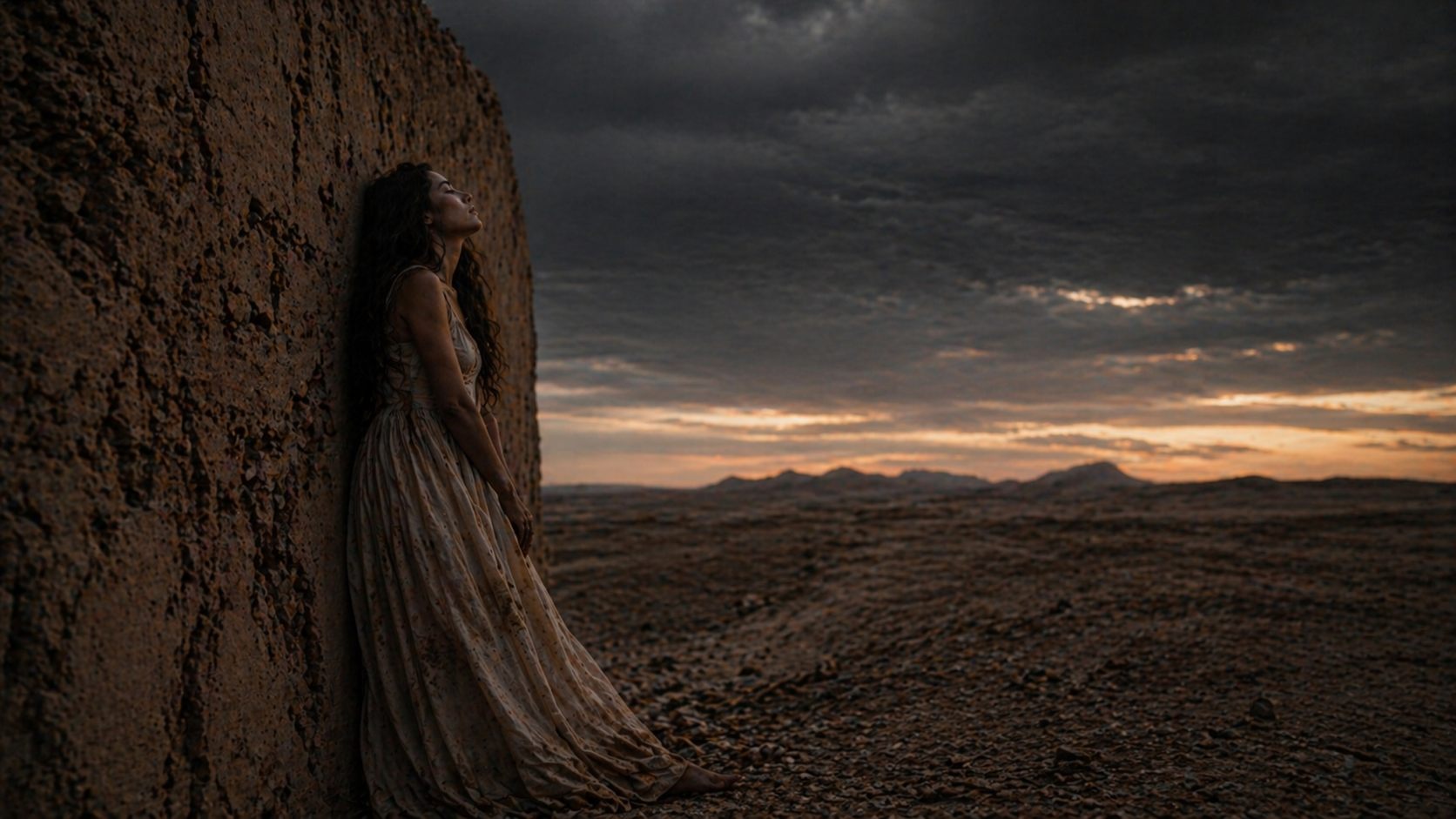
Teresa of Avila — You Are Not Lost, You Are Going Deeper
Teresa of Avila — John of the Cross's friend and collaborator, the sixteenth-century Spanish Carmelite mystic who reformed her own religious order and wrote one of the great maps of the interior life — described the soul's journey inward in her masterwork, The Interior Castle.
She imagined the soul as a castle of many rooms — many dwelling places — each one deeper than the last. The spiritual life, for Teresa, was not primarily about what you do for God. It was about moving inward, through room after room, toward the center where God dwells.
And some of those inner rooms are very dark.
Teresa was honest about the difficulty of the interior journey. She wrote about seasons of what she called spiritual aridity — dryness, darkness, the felt absence of God in prayer. She did not treat these seasons as failures. She treated them as part of the journey. Evidence that the soul was moving deeper, not evidence that it had gone wrong.
The sentence that has meant the most to me from Teresa is deceptively simple: you are not lost. You are going deeper.
Not lost. Going deeper.
That reframe — that the darkness is not evidence of God's abandonment but of His invitation further in — changed the quality of my own darkness. It did not end it. But it gave it a different meaning. And meaning, in a season of suffering, is not nothing. It is sometimes everything.
The Puritans — Spiritual Desertion and the Deepest Faith
The Puritan writers of the seventeenth century — men like John Owen, Richard Sibbes, and Thomas Goodwin — wrote extensively about what they called spiritual desertion: seasons when God withdraws the felt sense of His presence and the soul is left in a darkness that will not lift regardless of spiritual effort.
They did not treat these seasons as evidence of weak faith. They treated them as evidence of the opposite.
Richard Sibbes wrote that the deepest believers often experience the deepest desolation — that the very fact of the darkness, and the soul's refusal to abandon God in it, was itself a form of faith more mature than anything the comfortable seasons could produce.
The Puritans drew a distinction that the modern church has largely lost: the difference between the consolations of God and the God of consolation. The first is the felt sense of His presence, the warmth of devotion, the experience of answered prayer and spiritual productivity. The second is God Himself — His character, His faithfulness, His presence — independent of whether you can feel it.
Spiritual desertion strips the soul of the consolations. What it cannot strip is the God of consolation. And the faith that remains when everything comfortable has been removed is the most durable faith there is.
"For I am convinced that neither death, nor life, nor angels, nor principalities, nor things present, nor things to come, nor powers, nor height, nor depth, nor any other created thing, will be able to separate us from the love of God, which is in Christ Jesus our Lord." — Romans 8:38–39, NASB95
Paul wrote that from inside suffering. Not from a place of resolution. From the conviction — tested, costly, darkness-formed — that the love of God is not a consolation that can be withdrawn. It is the ground itself.
— ✦ —
What They All Share — The Thread That Runs Through
John of the Cross. The Desert Fathers and Mothers. Julian of Norwich. Teresa of Avila. The Puritan writers. Different centuries. Different traditions. Different circumstances.
But the same thread runs through all of them.
They all stayed.
They all brought their darkness — their dryness, their questions, their desolation, their felt abandonment — to God. Not performed. Not resolved before they prayed. They brought the raw material of their suffering directly to the One they were suffering toward.
They all wrote it down. Not to produce theological content. To leave a record for the people who would come after them — the people who would find themselves in the same darkness centuries later and need to know: this has a name. This is expected. You are not alone.
And they all, in their own way, found that the darkness was not the end. Not that it resolved neatly or quickly or according to their preferred timeline. But that God was present in it — not behind it, not despite it, but in it. Working in the dark in ways He cannot work in the light.
"Even the darkness is not dark to You, and the night is as bright as the day. Darkness and light are alike to You." — Psalm 139:12, NASB95
The darkness is not dark to Him. What feels like absence is not absence. What feels like abandonment is not abandonment. The same God who is present in the light is present in the dark — working, forming, leading, accompanying — even when the soul cannot feel it.
You are in this company. The company of the suffering faithful who stayed. The witnesses who wrote it down for you. The cloud that surrounds you — not only the triumphant, but the persevering.
You are not crazy. You are not uniquely broken. You are not failing.
You are in ancient, holy, hard company. And you are held.
— ✦ —
What to Do With This — Letting the Witnesses Accompany You
I want to offer something practical before we close.
The ancient witnesses are not just historical figures to be admired from a distance. They are, in the most meaningful sense, companions. Their words — written centuries ago from inside their own darkness — were written for you. For this moment. For the season you are in right now.
Here is how I have found their company most sustaining:
Read slowly, not comprehensively
The contemplative classics are not meant to be consumed quickly. They are meant to be sat with. A page of John of the Cross, read slowly twice, will do more for a soul in the dark night than a chapter read at the pace of a business book. Let one sentence land. Stay with it. Let it speak to where you actually are.
Let their words become your prayer
When you have no words of your own — when prayer feels like speaking into a silence that gives nothing back — borrow theirs. The Psalms of lament. Julian's all shall be well, prayed not as a platitude but as a hard-won act of trust. John of the Cross's conviction that the endurance of darkness is preparation for great light, held in the mind like a lamp.
Remember that they stayed
When the darkness makes staying feel impossible — when you wonder whether the whole project of faith is worth continuing — remember that the most serious Christians in the history of the church felt exactly what you feel right now. And they stayed. Not because it was easy. Because something in them — some grace they did not manufacture — kept them returning to the God who felt absent, kept praying into the silence, kept showing up even when showing up produced nothing.
That stubborn, unperforming, costly faithfulness is the deepest faith there is. And it is available to you.
"I would have despaired unless I had believed that I would see the goodness of the Lord in the land of the living. Wait for the Lord; be strong and let your heart take courage; yes, wait for the Lord." — Psalm 27:13–14, NASB95
Wait. Not passively. With courage. With the stubbornness of a soul that has decided — against all felt evidence — that God is who He says He is, and that the darkness is not the last word.

— ✦ —
You Do Not Have to Stay in This Alone
The ancient witnesses left their words for you. But words on a page, however sustaining, are not the same as being accompanied in real time — by someone who knows this terrain, who can sit with your questions without rushing you toward resolution, who can offer the kind of grounded, theologically informed presence that the soul in the wall most needs.
On June 13, I am holding a 90-minute online retreat called Giving Shape to Sorrow. It is a space built for the woman in the wall — for the one who needs somewhere to exhale, to be with God without striving or explaining, to let her hands move in response to Scripture and silence when her words have run out.
Simple art as prayer. No artistic skill required. No words required. Cameras optional. Come exactly as you are — in whatever state your faith is in. The ancient witnesses met God in darkness. So can you.
The retreat is Saturday, June 13. Registration is open now.
You are not alone in your location. Come and find your company.
— ✦ —
Subscribe to Notes from the In Between
A quiet place for the long middle.
Short reflections, prayers, and healing words for those living between grief and glory.

For the woman in the middle of something hard.
Lament & Light is a podcast for the Christian woman who is still believing, still showing up, and still carrying more than anyone around her knows. Honest faith. Unhurried conversations. No platitudes.
Author

Paris Byrum
Author
Paris Byrum is a spiritual mentor and trauma-informed soul care guide who helps weary hearts heal through biblical wisdom, sacred presence, and soul-deep formation.
Recent Posts