
What to Do When You Can't Pray — 6 Practices for the Wall
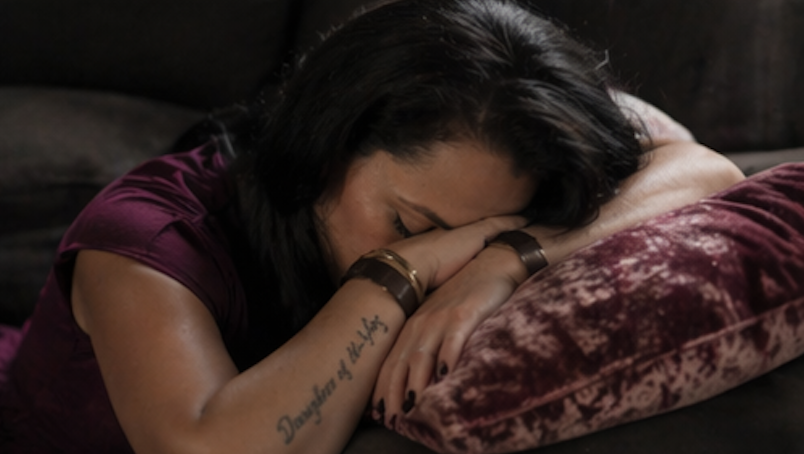
What to Do When You Don't Know How to Pray Anymore
— ✦ —
There is a particular kind of grief that comes with losing the ability to pray.
Not a sudden loss — not the kind that comes from one devastating moment. The slow kind. The kind where you sit down to pray one morning and notice, with a faint alarm, that the words are not there. And then you sit down the next morning and notice the same thing. And then a week passes, and a month, and what was once as natural as breathing has become something you approach with dread — or stop approaching at all.
If you are in that place right now, I want to begin by saying something important:
The inability to pray in the way you once did is not evidence that prayer has stopped being real. It may be evidence that God is inviting you into a different kind of prayer entirely.
Want to listen instead of read?
The contemplative tradition — the stream of Christian spirituality that takes seriously the interior life and the long, often painful process of formation — has always known that the forms of prayer appropriate to one season of faith are not always appropriate to another. What sustained you in the first half of your Christian walk may not sustain you at the wall. And forcing the old forms onto a season they were not designed for tends to produce one of two things: shame or silence.
This post is not about getting your prayer life back to what it was. It is about finding what prayer can be in the season you are actually in.
— ✦ —
Before the Practices — What This Season Is Actually Asking of You
I want to say something about the posture of this post before we go any further.
What follows is not a program. It is not a five-step plan for restoring spiritual productivity. It is not a list of things to add to your schedule so that your prayer life can return to a measurable, manageable output.
It is a set of practices designed for the depleted soul. For the woman who has run out of words. Who has tried harder and found that trying harder makes things worse. Who needs permission to put down the tools that have stopped working and pick up something smaller, slower, and less impressive.
These practices do not produce results in the way the first half of faith understands results. They do not generate the felt sense of God's presence, or the warmth of devotion, or the confidence of answered prayer. What they do is keep you tethered. Keep you present — however dimly, however imperfectly — to a God who is present to you even when you cannot feel it.
At the wall, keeping you tethered is the most important thing. And tethered is enough.
"In the same way the Spirit also helps our weakness; for we do not know how to pray as we should, but the Spirit Himself intercedes for us with groanings too deep for words." — Romans 8:26, NASB95
The Spirit prays when you cannot. He intercedes on your behalf with groanings too deep for words — which means the absence of your own words is not the absence of prayer. It is the condition under which the Spirit's intercession becomes most visible. You do not have to produce something coherent for God in this season. He already knows. And He has not left.
— ✦ —
Six Practices for the Depleted Soul — Shelter, Not Program
-
Pray the Psalms of Lament
The Psalms were given to us, in part, precisely for the seasons when we have no words of our own.
And not all the Psalms were given equally for the wall. The triumphant Psalms — the ones that move easily from suffering to praise in four verses, that arrive at resolution before you have had time to fully enter the lament — can feel cruel in a season of deep desolation. They can feel like evidence that you are doing something wrong, because the psalmist got to praise and you cannot find it.
The Psalms of lament are different. They sit in the darkness for a long time. They are honest about the felt absence of God, the unanswered questions, the weariness that will not lift. Psalm 22. Psalm 88. Psalm 42. Psalm 13. These are not failure psalms. They are the most honest prayers in Scripture.
"How long, O Lord? Will You forget me forever? How long will You hide Your face from me? How long shall I take counsel in my soul, having sorrow in my heart all the day?" — Psalm 13:1–2, NASB95
The psalmist is not performing trust here. He is in genuine anguish, bringing that anguish directly to God without cleaning it up first. And that is what the Psalms of lament give you permission to do: to bring the raw, unresolved, unperformed reality of where you are — and to address it to God rather than away from Him.
This is not a lesser form of prayer. It is one of the most ancient and most faithful forms of prayer there is. The lament psalms were sung in the temple. They were part of Israel's corporate worship. Bringing your honest suffering to God is not a failure of faith. It is faith.
A practice: choose one lament psalm and read it slowly, once each morning, for a week. Do not try to get to the praise at the end. Let the lament land. Let it be your prayer. See what happens when you stop performing and start speaking honestly.
-
The Prayer of Relinquishment
The prayer of relinquishment is one of the most misunderstood practices in the Christian life — and one of the most important ones for the woman at the wall.
I want to begin by saying what it is not. It is not the same as giving up. It is not resignation. It is not the passive acceptance of harm in the name of spirituality. For women who have been told, in the name of faith, to endure things they should have been allowed to leave — who have had the language of surrender weaponized against them — I want to be careful and direct: surrendering to God is not the same as surrendering to an abusive situation. Letting go of control is not the same as letting go of responsibility.
The prayer of relinquishment is this: releasing to God what you cannot carry, what you cannot fix, what you cannot understand — while staying present to Him in the release. It is an open hand, not a closed one. It is not: I give up. It is: "I give this to You, because I am not able to hold it and You are."
"Cast your burden upon the Lord and He will sustain you; He will never allow the righteous to be shaken." — Psalm 55:22, NASB95
Jesus modeled this prayer in Gethsemane. He did not arrive in the garden composed and unmoved. He sweat blood. He asked if there was another way. He brought the full, unmanaged weight of what He was facing to His Father — and then released it. Not my will, but Yours.
That is the prayer. It does not require that you feel peaceful before you pray it. It does not require resolution or understanding or the sense that God has heard. It requires only the willingness to open the hand — to say, however imperfectly, however repeatedly, however tearfully: I cannot carry this. I give it to You. I trust that You receive it.
A practice: identify one thing you have been holding white-knuckled — a fear, a grief, a situation you cannot control, a question you cannot answer. Write it down. And then physically open your hands as you pray it back to God. The body knows things the mind resists. Let the open hands be the prayer.
-
Silence and Solitude — Even When It Is Hard
I want to be honest with you about my own relationship with this practice before I commend it to you. Because for decades, I could not enter it at all.
Silence, for me, was not peaceful. It was the place where intrusive thoughts surfaced. Where memories of childhood abuse came back without warning. Where the things I had spent years learning to outrun finally caught up with me. Solitude felt less like a spiritual practice and more like punishment — the kind I had experienced as a child, the go to your room and sit on your bed alone kind, that stretched on for months. The kind that taught me that being alone was something you were sentenced to, not something you chose.
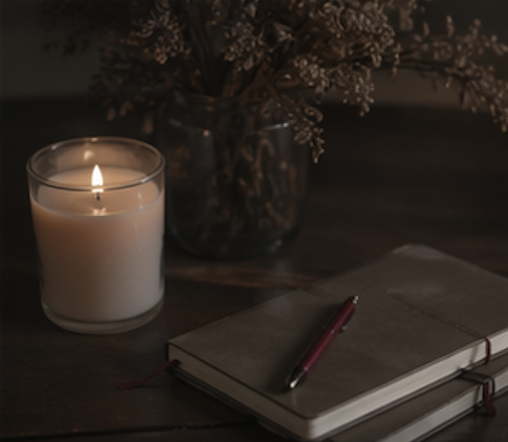
If that is your relationship with silence, I want to say: you are not failing at this practice. You may simply need to approach it differently. In smaller doses. In a safer container. With a candle lit and music playing softly, if that helps. With permission to leave when it becomes too much.
What I can tell you is that slowly — over years, not weeks — silence began to change for me. The threat of it diminished as I began to have companions in it: the Psalms, the ancient writers, and gradually, the presence of God himself, who had been there all along, waiting for me to stop running long enough to notice.
"Be still, and know that I am God." — Psalm 46:10, NASB95
The Hebrew behind that verse is not a gentle suggestion. It is closer to:
Let your hands fall.
Stop striving.
Stop fighting.
The dark night is, among other things, a season where the forced silence you did not choose begins to become the chosen silence that forms you. Where what felt like punishment begins, slowly, to feel like presence.
A practice: begin with five minutes. Not in a place that feels threatening. Somewhere small and safe — the corner of your bedroom, a chair near a window. Light something. Open the Psalms to a lament psalm and read it once. Then sit for five minutes with nothing required of you. Not words. Not outcomes. Just presence. Let that be enough.
-
Lectio Divina — Slow, Non-Productive Encounter With Scripture
The wall often affects our relationship with Scripture in ways that are painful and confusing.
The Bible that once felt alive and nourishing begins to feel flat. The verse that used to ignite something now sits on the surface without sinking in. The passage that once brought comfort now feels distant — or, for some women, confusing and even painful, especially when Scripture has been used as a weapon against them in the past.
If that is where you are, I want to say: the flatness is not a sign that Scripture has stopped being true. It is a sign that your soul is too depleted to receive it at the pace you used to run. The problem is not the Word. It is the speed.
Lectio Divina — sacred reading — is the ancient practice of slowing down to almost a stop with a very small amount of Scripture. Not a chapter. Not a passage. Four or five verses, sometimes fewer. Read slowly. Multiple times. Not to understand comprehensively. To listen. To notice what word or phrase catches your attention — not because you chose it intellectually, but because something in you simply paused there. And then to sit with that word. To let it speak to what you are actually carrying.
"Your word is a lamp to my feet and a light to my path." — Psalm 119:105, NASB95
A lamp to your feet. Not a floodlight illuminating the whole road ahead. A lamp — small enough to show you the next step, and only the next step. Lectio Divina is learning to receive the lamp rather than demanding the floodlight.
A practice: choose a lament psalm or a short passage from the Gospels — somewhere Jesus is present with someone who is suffering. Read it aloud slowly, twice. Notice what word or phrase stays with you. Write it down. Sit with it for five minutes. Ask simply: what is this saying to where I actually am? Then let it be. No performance. No conclusions required.
-
Receiving Beauty — Theological Medicine, Not Self-Care
This practice may be the most countercultural one on this list. Because it does not look like spiritual discipline. It looks like going for a walk. Lighting a candle. Buying yourself something small and beautiful. Letting your child press a smooth stone into your hand and receiving it as though it matters.
But I want to offer a theological frame for why beauty is not self-indulgence in a season of suffering — why it is, in fact, one of the most ancient and most durable forms of formation available to the depleted soul.
The created world was made by God to bear witness to His character. Every particular beauty — light on water, the architecture of a cathedral, music that has no agenda, the extravagant color of a bougainvillea in summer — is the created world doing what it was designed to do: pointing beyond itself to the One who made it. Bearing witness to the truth that something good is behind all of this, even when that truth cannot be felt in prayer.
"The heavens are telling of the glory of God; and their expanse is declaring the work of His hands." — Psalm 19:1, NASB95
In the deepest part of my own suffering — after days of being unable to get out of bed — one of my daughters brought in a rose from the fallen autumn leaves. That one small gesture of beauty stopped something. It did not fix anything. It did not end the darkness. But it cracked something open just enough for light to come through.
Beauty is not a reward for surviving the wall. It is available to you in the middle of it. The created world has been bearing witness all along — to a Creator who called it good, who is present in it, who has not left even when He cannot be felt.
A practice: once this week, go somewhere beautiful. Or receive something beautiful that comes to you unexpectedly — a kindness, a piece of music, a shaft of light through a window. Receive it deliberately. Sit with it for a moment. Let it be more than aesthetic. Let it be a word from the One who made it.
-
Receiving Spiritual Care — Letting Someone Walk Alongside You
The last practice is perhaps the hardest one — especially for women who learned early, as I did, that needing is dangerous. That self-sufficiency is survival. That asking for help is a vulnerability that will be used against you.
But I want to say it plainly: you were not made to carry this alone.
Spiritual care in this season can arrive in the plainest forms. An unexpected card from a friend who had been thinking of you. Someone who calls out of the blue because they felt prompted and listened. Your child pressing a collection of nature finds into your hand. The candle you light and the lights you turn down and the hour you give yourself permission to stop performing. Something small and lovely you choose for yourself — not as a reward, but as an act of receiving your own life.
And sometimes spiritual care arrives in a more intentional form. A trauma-informed spiritual director — someone trained to walk alongside you in exactly this kind of season. Someone who can hold your story with theological grounding and genuine attentiveness, who asks the questions that help you go deeper rather than the ones that push you toward resolution, who is not also depleted by your same season and can therefore offer a steadiness you cannot currently offer yourself.
Spiritual direction is not therapy. It is not counseling. It is accompaniment — a companion for the in-between. And having someone on the outside, trained to walk with you in what you are carrying, can be exactly what this terrain requires.
"Two are better than one because they have a good return for their labor. For if either of them falls, the one will lift up his companion." — Ecclesiastes 4:9–10, NASB95
You were not designed for solitary formation. The wall isolates — but the isolation is not the prescription. It is the wound. Receiving care, in whatever form is available to you, is not weakness. It is the courageous act of a soul that has finally stopped pretending it does not need what it needs.
— ✦ —
These Are Not Heroic — And That Is the Point
I want to hold all six of these together for a moment before we close.
Psalms of lament. Prayer of relinquishment. Silence and solitude.
Lectio Divina. Receiving beauty. Receiving spiritual care.
None of these will fix the wall. None of them will shorten the dark night or produce the breakthrough you have been waiting for. They will not generate the felt sense of God's presence, or restore the productivity of your devotional life, or make the silence go away.
What they will do is keep you tethered. Grounded. Present to a God who is present to you — however dimly you can perceive it — in a season when the usual forms of perceiving have gone quiet.
They are shelter for the depleted, not a program for the productive. They do not need to be done perfectly. They do not need to produce results. They simply need to be returned to — slowly, imperfectly, repeatedly — for as long as this season lasts.
And this season will not last forever. I do not know when it will end. I cannot promise you a timeline. But I can tell you — from the other side of a wall that lasted five and a half years — that the practices of the dark season produce something in you that the practices of the light cannot. A faith that is quieter, more rooted, less dependent on feeling, more honestly grounded in the character of a God who did not leave even when He could not be felt.
"And not only this, but we also exult in our tribulations, knowing that tribulation brings about perseverance; and perseverance, proven character; and proven character, hope; and hope does not disappoint, because the love of God has been poured out within our hearts through the Holy Spirit who was given to us." — Romans 5:3–5, NASB95
Tribulation.
Perseverance.
Proven character.
Hope.
The sequence is not comfortable. But it is not random. And the hope at the end of it — the hope that does not disappoint — is not the hope of the first half, which is often tethered to outcomes and feelings and the evidence of God's favor. It is the hope of the second half: rooted in the character of the One who does not change, sustained by the love that has been poured into the heart even when the heart cannot feel it being poured.
That is what the wall is forming in you. Slowly. Unhurriedly. In the only way that lasts.
You are not behind. You are being formed.
— ✦ —
A Word Before You Go — On Hope Without Resolution
I want to close this post — and this entire blog series — with something honest.
I am not going to tell you that the wall ends in a breakthrough. I am not going to promise you a sunrise after the dark night, or a restoration of everything you have lost, or a return to the faith you had before.
What I can tell you is what the ancient witnesses told me — from their prison cells and their sickbeds and their desert wildernesses:
God was present in it. Even when He could not be felt. Even when prayer felt like speaking into an abyss. Even when the silence stretched on past every deadline your faith had privately set for Him.
He was present. He is present. In the middle of whatever you are in right now.
And the practices in this post are not a way of forcing Him to show up. They are a way of remaining available to a showing up that may already be happening — in ways too small, too unhurried, too non-spectacular for the first half of faith to recognize.
A card in the mail. A child with a stone. A candle lit in the dark. A psalm prayed with empty hands.
These are not consolation prizes for a faith that has failed. They are the very means by which the deepest faith is formed.
"I would have despaired unless I had believed that I would see the goodness of the Lord in the land of the living. Wait for the Lord; be strong and let your heart take courage; yes, wait for the Lord." — Psalm 27:13–14, NASB95
Wait. Be strong. Take courage. Wait again.
Not passive. Not resigned. The active, courageous, stubborn posture of a soul that has decided — against all felt evidence — that God is who He says He is. That the darkness is not the last word. That the goodness of the Lord will be seen. Not yet. But — in ways that cannot be hurried — it will.
Held, not hurried. That is the promise of this season.
You are held. Even here. Even now. Even in this.
— ✦ —
A Space to Exhale — You Are Welcome Here
If this series has named something real in your life — if it has given you language for a season you have been carrying without words — I want you to know that Between Grief and Glory exists for exactly this.
Not as a place to have your questions answered quickly or your faith restored to what it was before. As a space of honest, theologically grounded, trauma-informed accompaniment for the woman in the wall. A place where you do not have to perform wellness before you are welcome. Where the lament is as honored as the praise. Where the unanswered questions are held, not hushed.
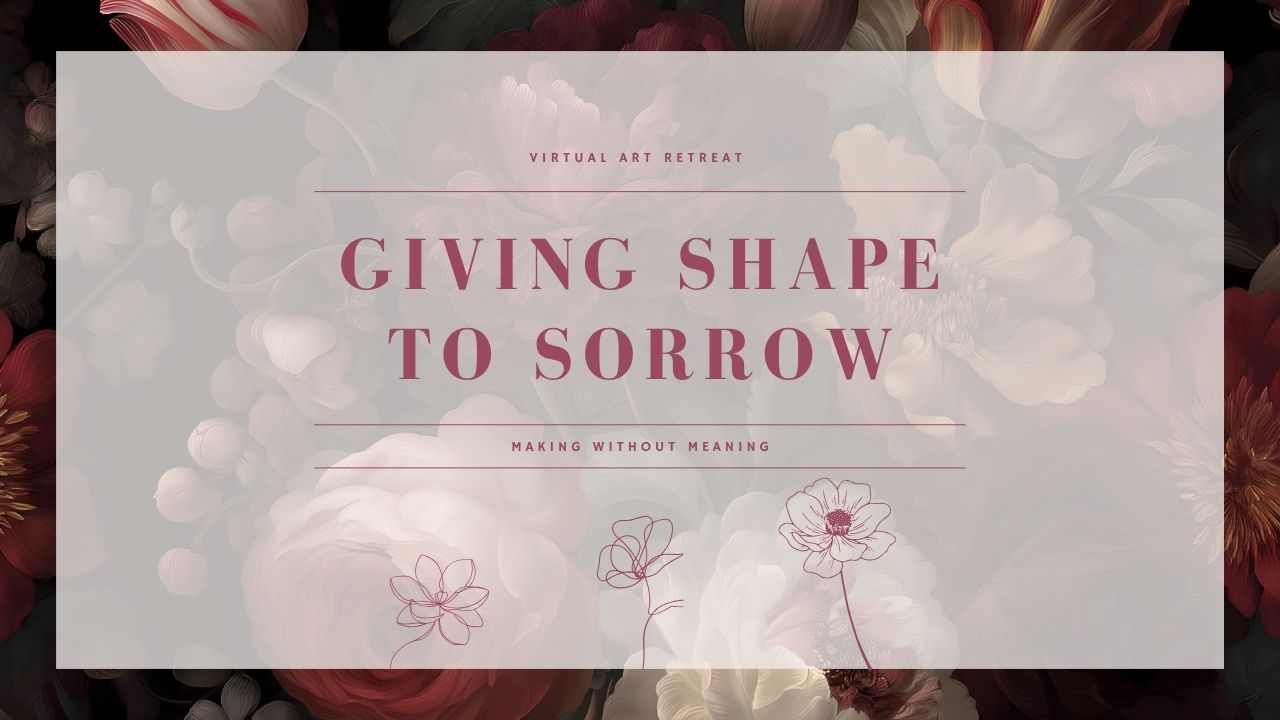
The Summer Art Retreat — Giving Shape to Sorrow — is this Saturday, June 13. It is 90 minutes online, designed for exactly this kind of season. Simple art as prayer. Scripture and silence. No skill required. No words required. Cameras optional. Come exactly as you are.
Registration closes when we begin. If you have been sitting with this — come.
And beyond the retreat: I am building something more sustained for women in this territory. Something that offers longer companionship, deeper formation, and the kind of accompaniment this season actually requires. More on that in July.
For now — come as you are. You are welcome here.
— ✦ —
Subscribe to Notes from the In Between
A quiet place for the long middle.
Short reflections, prayers, and healing words for those living between grief and glory.

For the woman in the middle of something hard.
Lament & Light is a podcast for the Christian woman who is still believing, still showing up, and still carrying more than anyone around her knows. Honest faith. Unhurried conversations. No platitudes.
Author

Paris Byrum
Author
Paris Byrum is a spiritual mentor and trauma-informed soul care guide who helps weary hearts heal through biblical wisdom, sacred presence, and soul-deep formation.
Recent Posts