
Raised in Violence, Rising in Faith: A Story of Christian Trauma Recovery and Hope
Raised in Violence, Rising in Faith: A Story of Christian Trauma Recovery and Hope
There are stories we bury because telling them feels like reopening a wound.
And then there are stories that, when spoken, become a doorway—not only for us, but for someone else who is still living in the silence.
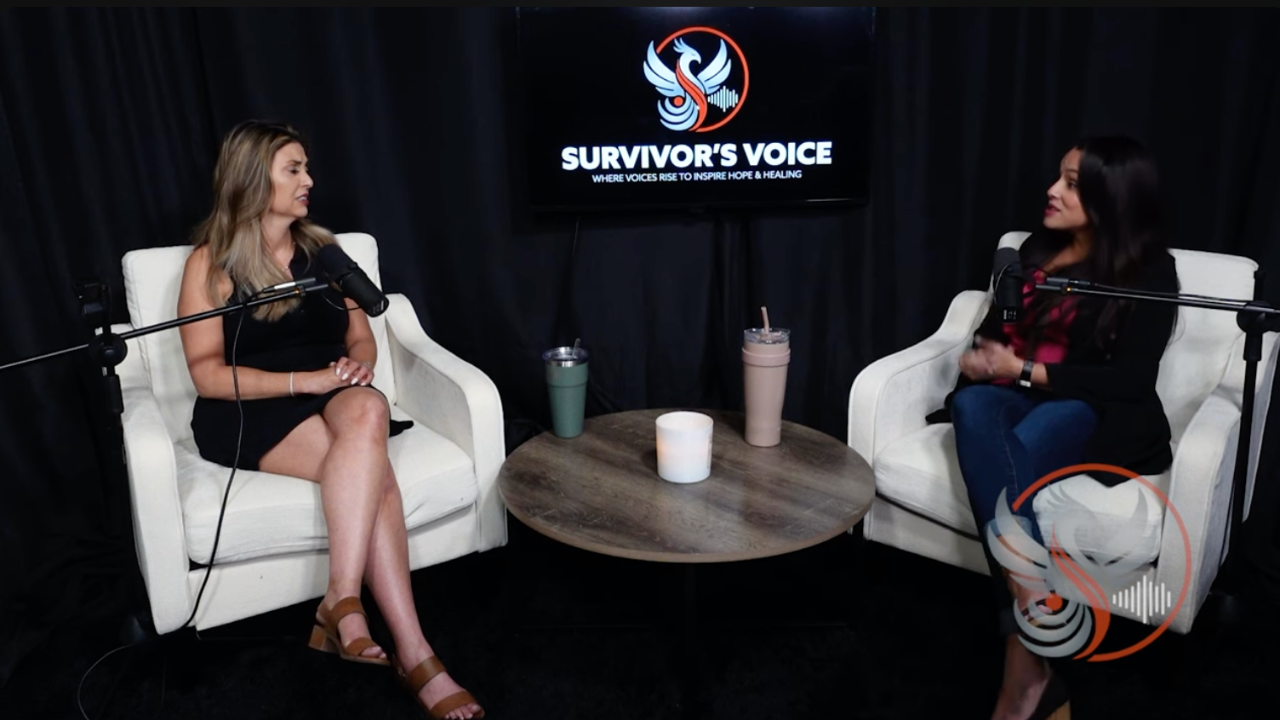
Recently, I shared my story publicly for the first time in a long-form setting. Not because I am “fully healed.” Not because everything is resolved. But because I know what it feels like to wonder how to navigate grief as a Christian when your story includes abuse, betrayal, and loss.
And I know what it means to need Christian grief support that does not rush resurrection.
This is my story of Christian trauma recovery—and faith-based healing that did not erase grief, but met me inside it.
When Your First Memories Are Survival
I was born into violence.
My earliest memories include instability, neglect, and fear. As a child, I learned how to read the emotional temperature of a room before I learned long division. I learned how to survive before I learned how to rest.
Scripture tells us:
“The LORD is near to the brokenhearted
And saves those who are crushed in spirit.” (Psalm 34:18, NASB95)
But when you are a child in chaos, you do not feel nearness. You feel confusion.
My mother fled in the middle of the night when I was five years old. I remember holding a blanket and a stuffed animal. I did not yet have language for trauma. I only knew that fear was normal.
Children adapt. Our nervous systems wire around survival. That wiring does not disappear when the danger ends.
It follows us into adulthood.
Into relationships.
Into motherhood.
Into faith.
When Abuse Confuses Love and Harm
Later, physical abuse escalated into sexual abuse.
One of the most disorienting realities of childhood sexual trauma is that it often comes wrapped in counterfeit closeness. As a child longing for affection, I mistook attention for love.
That confusion breeds shame.
It took a fifth-grade classroom lesson for me to realize that what was happening was wrong. A simple statement about bodily autonomy broke through years of normalization.
When I stopped participating in that dynamic, the abuse shifted toward my sister.
For years, I carried guilt. Trauma survivors often believe they were responsible for what followed. But Scripture reminds us:
“The LORD is righteous in all His ways
And kind in all His deeds.” (Psalm 145:17, NASB95)
God’s righteousness means the guilt does not belong to the child.
Still, shame is stubborn.
This is why Christian trauma recovery must address the body, the nervous system, and the theology we carry. Faith-based tools for emotional healing must reach beneath behavior into belief.
When No One Believes You
At fifteen, when child protective services became involved, I expected advocacy.
Instead, I was told I was lying.
There is a particular grief that comes when authority figures dismiss your pain. It reinforces the lie that your voice does not matter.
Lament became my silent language.
Scripture gives us permission for lament:
“Why do You stand afar off, O LORD?
Why do You hide Yourself in times of trouble?” (Psalm 10:1, NASB95)
The Bible does not sanitize suffering. It gives us words when our own fail.
Eventually, a supervisor witnessed the mistreatment and removed that social worker from my case. But the system still failed to bring meaningful justice.
And so I entered foster care carrying not only trauma, but disillusionment.
Surviving the System and Learning to Choose Life
Foster care in Los Angeles County is overwhelmed. I had frequent social worker changes. Instability layered upon instability.
But somewhere inside me, a quiet resolve formed: I would not let chaos dictate my future.
I called friends’ parents and asked if they would become certified foster parents so I could graduate from my original high school.
One said yes.
Looking back, I see resilience that could only have been sustained by grace.
“Though he fall, he shall not be utterly cast down;
For the LORD upholds him with His hand.” (Psalm 37:24, NASB95)
This was not triumphalism. It was survival anchored in faith-based community support.
Many youth in the system turn to substances, unsafe relationships, or self-harm to cope. My sister and I responded differently to trauma.
She internalized.
I over-functioned.
Both were pain.
Grief That Arrives Years Later
When I was twenty-two, my sister died from complications related to her diabetes—exacerbated by instability, disordered eating, and the long-term effects of trauma.
Grief is rarely tidy.
We were close in age, but complicated in relationship. Trauma had shaped us differently. For years, I carried guilt that I survived differently.
It was not until much later that I began engaging grief devotional practices intentionally—sitting with sorrow rather than suppressing it.
Scripture says:
“Jesus wept.” (John 11:35, NASB95)
The shortest verse in Scripture may be one of the most profound. Even knowing resurrection was coming, Jesus wept.
Christian grief support must make space for tears even when hope is present.
Faith-based healing does not bypass lament.
It honors it.

Motherhood Through the Lens of Hypervigilance
When I became a mother, trauma followed me.
Hypervigilance felt like love.
Control felt like protection.
Anger felt like strength.
For years, I rehearsed worst-case scenarios in my mind. I struggled to take my children into public spaces without scanning for threats.
It was not until deep storywork and Christian mentorship for grief recovery that I recognized anger was not my core emotion.
Fear was.
Shame was.
Unprocessed grief was.
Scripture reminds us:
“There is no fear in love; but perfect love casts out fear, because fear involves punishment.” (1 John 4:18, NASB95)
That verse is not a command to suppress fear. It is an invitation to let love slowly retrain our nervous systems.
Over the past five years, through therapy, spiritual mentorship, and faith-based tools for emotional healing, I have become a softer mother.
More aware.
More regulated.
More present.
Healing did not erase my story.
It transformed how I embody it.
Why We Need Spiritual Mentorship and Community
We cannot heal in isolation.
Community is not optional in Christian trauma recovery. It is essential.
I serve now as a chaplain in juvenile detention. Teenagers ask questions that cut straight to the marrow:
Where was God?
Why didn’t anyone protect me?
Does my life matter?
They do not need platitudes.
They need presence.
“Bear one another’s burdens, and thereby fulfill the law of Christ.” (Galatians 6:2, NASB95)
This is spiritual mentorship.
This is faith-based community support.
This is women’s spiritual coaching at its most sacred—not fixing, but witnessing.
The first words out of our mouths when someone discloses trauma should be:
I believe you.
That sentence interrupts shame.
Breaking Cycles Through Faith-Based Healing
Statistics show that children raised in abuse have dramatically increased risk of entering abusive relationships later.
Patterns repeat until they are interrupted.
Breaking cycles required:
- Counseling
- Christian grief support
- Storywork that explored my past without drowning in it
- Spiritual mentorship
- Faith-based tools for emotional healing
- Courage to ask for help
Scripture speaks to transformation not as instant perfection, but renewal:
“And do not be conformed to this world, but be transformed by the renewing of your mind…” (Romans 12:2a, NASB95)
Renewal is slow.
It is embodied.
It often requires grief and faith resources that hold both sorrow and hope.

How to Navigate Grief as a Christian Without Bypassing Pain
If you are wondering how to navigate grief as a Christian, especially when trauma is involved, here are truths I have learned:
1. Lament is not a lack of faith.
David wrote,
“My tears have been my food day and night…” (Psalm 42:3a, NASB95)
2. Healing requires honesty.
God does not heal the version of you that pretends.
3. Community matters.
Isolation reinforces shame.
4. Faith-based tools for emotional healing must include the body.
Trauma is stored physiologically, not just spiritually.
5. Spiritual mentorship accelerates formation.
We need guides who have walked through fire and found Christ faithful there.
Rising in Faith, Not Escaping the Past
Today, I am a homeschooling mother of six.
A chaplain.
A writer.
A woman still healing.
Not because trauma disappeared.
But because Christ met me inside it.
“He heals the brokenhearted
And binds up their wounds.” (Psalm 147:3, NASB95)
Binding wounds takes time.
It requires touch.
It requires patience.
Faith-based healing is not about denying what happened.
It is about allowing God to form something redemptive within it.
If You Are Still in the Middle
If you are currently in abuse…
If you are in foster care…
If you feel silenced…
You are not weak.
You are not dramatic.
You are not alone.
There are grief and faith resources available.
There is Christian mentorship for grief recovery.
There are communities ready to say, “I believe you.”
It may begin with one step.
One phone call.
One conversation.
One prayer whispered through tears.
“The LORD will accomplish what concerns me;
Your lovingkindness, O LORD, is everlasting;
Do not forsake the works of Your hands.” (Psalm 138:8, NASB95)
You are the work of His hands.
Survival may have been your first chapter.
But it does not have to be your last.
Rising in faith is possible.
Not because we are strong.
But because Christ meets us in the rubble — and stays.
Continue the Conversation: Listen to The Survivor’s Voice (Part One & Two)
If this reflection stirred something tender in you—if you felt the ache for deeper friendship, or the longing to be truly seen in your grief—you are not alone.
I recently had the honor of joining The Survivor’s Voice for a two-part conversation where we explore trauma, and the slow work of faith-based healing in more depth.
If you are longing for a reminder that you are not alone in your story. I invite you to listen to Part One and Part Two of The Survivor’s Voice featuring our conversation.
Subscribe to Notes from the In Between
A quiet place for the long middle.
Short reflections, prayers, and healing words for those living between grief and glory.

For the woman in the middle of something hard.
Lament & Light is a podcast for the Christian woman who is still believing, still showing up, and still carrying more than anyone around her knows. Honest faith. Unhurried conversations. No platitudes.
Author

Paris Byrum
Author
Paris Byrum is a spiritual mentor and trauma-informed soul care guide who helps weary hearts heal through biblical wisdom, sacred presence, and soul-deep formation.
Recent Posts