
Reflections
Guiding hearts for spiritual formation through suffering
Between Grief and Glory: The Sacred Middle Where God Meets Us

Between Grief and Glory: The Sacred Middle Where God Meets Us
There is a space in the Christian life that few people name and even fewer know how to hold.
It is the space after the prayer has been prayed but before it is answered.
The space after the loss but before new life has taken root.
The space where the old story has ended, yet the new one has not begun.
It is the space between grief and glory.
Many of the women I walk with find themselves here. Faithful. Still loving Jesus. Still showing up. And yet quietly weary. Quietly aching. Quietly wondering whether God still sees them in the middle of what feels unresolved.
This is the sacred middle.
And it is not a detour.
It is formation.
The Liminal Space We Rarely Acknowledge
Between grief and glory is a liminal place. It is unsettled, tender, and often lonely. It does not look like victory. It does not resolve neatly. There is no ribbon tied around it.
In faith spaces, we are often uncomfortable with what cannot be quickly r...
Raised in Violence, Rising in Faith: A Story of Christian Trauma Recovery and Hope
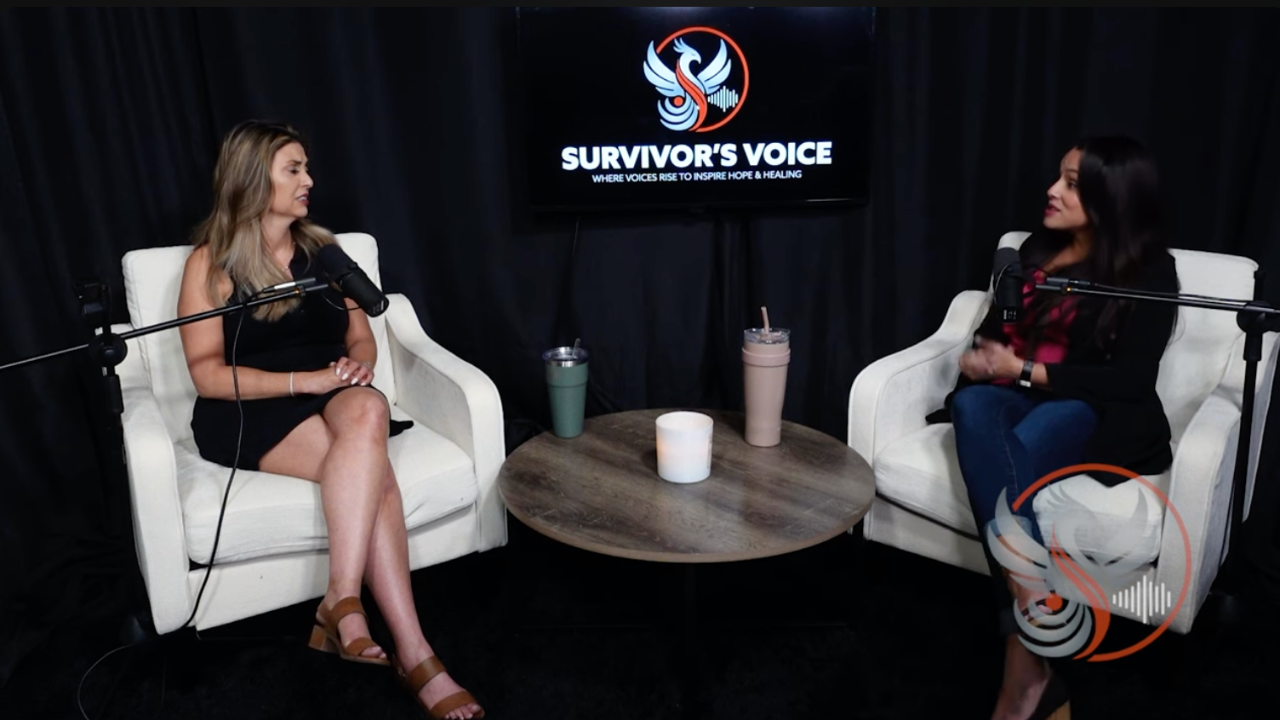
Raised in Violence, Rising in Faith: A Story of Christian Trauma Recovery and Hope
There are stories we bury because telling them feels like reopening a wound.
And then there are stories that, when spoken, become a doorway—not only for us, but for someone else who is still living in the silence.
Recently, I shared my story publicly for the first time in a long-form setting. Not because I am “fully healed.” Not because everything is resolved. But because I know what it feels like to wonder how to navigate grief as a Christian when your story includes abuse, betrayal, and loss.
And I know what it means to need Christian grief support that does not rush resurrection.
This is my story of Christian trauma recovery—and faith-based healing that did not erase grief, but met me inside it.
When Your First Memories Are Survival
I was born into violence.
My earliest memories include instability, neglect, and fear. As a child, I learned how to read the emotional temperature of a room before...
Embodied Spiritual Formation: Healing Faith in the Body After Grief

Embodied Spiritual Formation: Healing Faith in the Body After Grief
To the wounded Christian grieving alone—
There is a particular kind of loneliness that comes when suffering outpaces language.
You still believe. You still love God. You still show up to church, open Scripture, whisper prayers when you can. And yet, your body tells a different story. Your chest tightens when you try to pray. Your shoulders stay raised, braced for impact. Your nervous system never quite settles, even when the words of faith are familiar.
Many faithful believers live here—caught between sincere belief and embodied exhaustion. We know what is true, but we do not feel safe enough to rest in it. This is not a failure of faith. It is a signal that grief has lodged itself somewhere deeper than cognition.
This is where embodied spiritual formation becomes not optional, but essential.
Why Faith Cannot Remain Only in the Mind
Embodied Spiritual Formation for Christian Grief Recovery
Christian formation h...
When Words Fail Us: Liturgy as a Shelter for Prayer

When Words Fail Us: Liturgy as a Shelter for Prayer
To the weary heart reading this—
There are seasons when prayer feels impossible.
Scripture does not deny this reality. It names it.
“How long, O Lord? Will You forget me forever? How long will You hide Your face from me?” (Psalm 13:1, NASB95).
Not because faith is gone, or because desire has dried up, but because the well of words is empty. Grief has a way of doing that. Trauma does, too. Suffering presses so deeply on the chest that even familiar prayers feel unreachable, as though they belong to someone else, in another life, before everything fell apart.
Many who come to Between Grief & Glory describe this moment with quiet shame.
I want to pray, but I do not know how. I believe God is near, but I cannot speak to Him. I open my mouth, and nothing comes out.
If this is you, let me say this gently and without qualification: you are not failing at prayer.
You are encountering the honest limits of language in the face of...

For the woman in the middle of something hard.
Lament & Light is a podcast for the Christian woman who is still believing, still showing up, and still carrying more than anyone around her knows. Honest faith. Unhurried conversations. No platitudes.
Author

Paris Byrum
Author
Paris Byrum is a spiritual mentor and trauma-informed soul care guide who helps weary hearts heal through biblical wisdom, sacred presence, and soul-deep formation.
Recent Posts