
Reflections
Guiding hearts for spiritual formation through suffering
The Damage Travels. The Guilt Does Not.

There is a question I get asked more than any other, and it almost never arrives in its own words.
It comes in sideways. A woman will be telling me about her mother, or her marriage, or the church she left, and somewhere in the third or fourth minute the sentence will surface, usually as an aside, usually with an apology attached:
I know I have my own stuff in this too.
Or: I'm sure I'm not blameless here.
Or, most often: I just don't know how much of this is my fault.
She is not asking me to reassure her. She is telling me the actual work she has been doing, which is not grieving and is not healing. It is auditing. She has been trying to determine her liability. Line by line, memory by memory, trying to separate the portion of the wreckage that belongs on her account from the portion that does not, and she cannot do it, and she has decided that the reason she cannot do it is that she has not tried hard enough.
I want to say something about that audit. I want to say why it never...
The Faithfulness Nobody Sees

There are two things people will tell you when your suffering has gone on longer than anyone expected, and I have come to believe both of them are lies, even when they are said with a kind Bible verse and a soft voice.
The first is some version of buck up. God ordained this season, so the most faithful thing you can do is stop asking why and start accepting it. The second is the opposite, and just as tidy. If you truly believed, if you prayed correctly, this would already be over. Both of these responses hand you a closed envelope and ask you not to open it. Both of them, in their own way, ask you to stop grieving, either because grief means you have not accepted God's will, or because grief means you have not trusted Him enough. I do not think Scripture asks either of these things of us. I think Scripture asks us to grieve as people who have hope, which is an entirely different instruction, and a much harder one to hold onto when a season will not end.
Prefer to listen? Listen to Ep...
What Happens When You Finally Get Somewhere Safe?

There is a particular kind of woman who cannot sit still, and she is almost never the woman anyone worries about. She is the one who shows up. She is the one holding the calendar, the meal train, the prayer chain, the carpool. If you asked her whether she was tired, she would say yes and then change the subject, because the tiredness is not interesting to her. It is simply the weather she lives in.
What almost nobody says out loud, including her, is that the moving is doing something. It is not only productivity. It is protection. As long as she keeps going, the things she has not had room to feel stay where she put them.
Would you rather listen to this episode instead? Listen to episode 23 now.
REST IS NOT ALWAYS THE GIFT WE ASSUME IT IS
We talk about rest in Christian spaces as though it were universally welcome, as though the only obstacle were a culture that will not let us slow down. For some women that is true. For a great many others, rest is not the reward at the end of th...
The Face You've Been Hiding From God
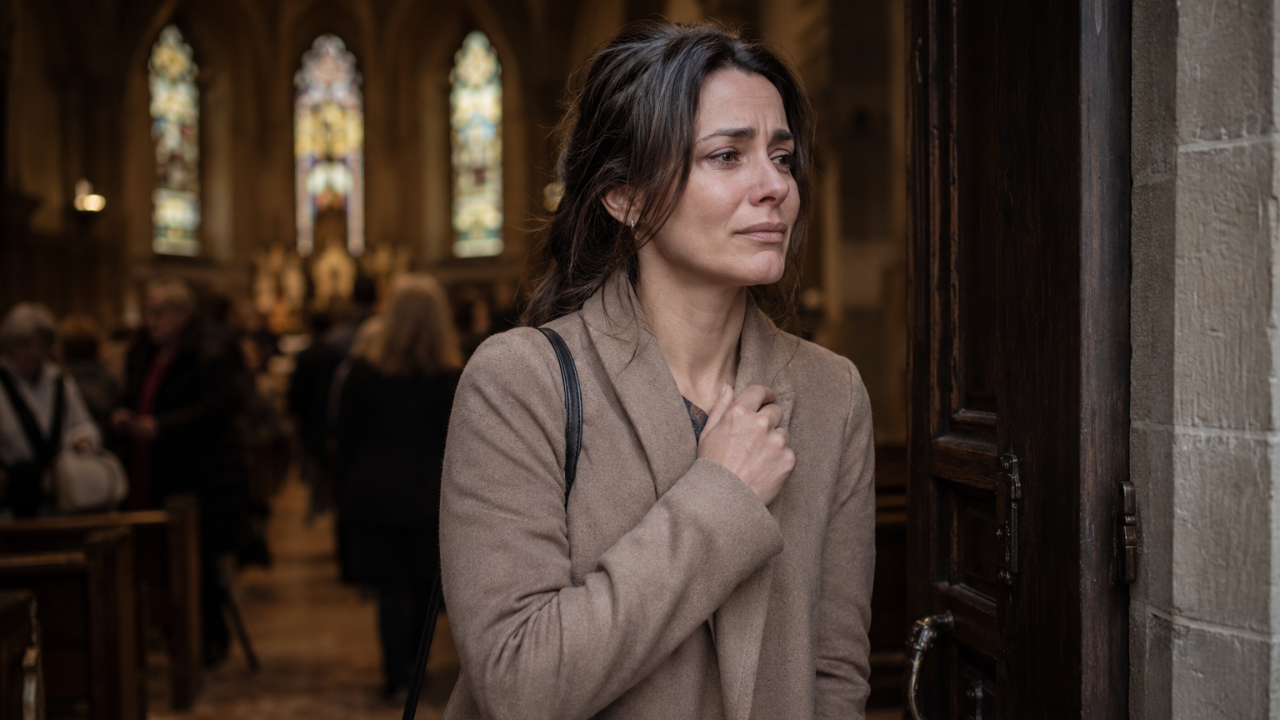
I was almost to the door.
I had made it through the entire service without falling apart, which in that season counted as a real accomplishment. There is a particular arithmetic you learn to do when you are barely holding on. You count the distance to the exit. You measure how many more hands you have to shake. You calculate whether you can get to the car before the thing rising inside you finishes its work.
I did not make it. My eyes filled. It was not sobbing. It was the part right before, the welling up, the moment when your body decides for you.
And someone stopped me and said this:
Why do you have tears welling up? Haven't you dealt with your childhood abuse already? It's been over fifteen years. Remember, Psalm 42 ends in hope in God.
I carried that sentence for years before I understood what had actually happened in that doorway.
LISTEN TO THE EPISODE
This post is the companion to Episode 22 of Lament & Light, part of A Summer of Sorrows. In the episode I go further i...
The Truth Your Body Has Been Trying to Tell You

You know the feeling before you have a word for it. The chest that tightens for no reason you can name. The exhaustion that sleep does not touch. The tears that arrive in the middle of an ordinary afternoon, while you are folding laundry or answering an email or watching your child do something small and lovely, and you could not explain them if someone asked. You have learned to move past it. You call it stress. You call it a hard week. You tell yourself it will lift once things settle down.
But it does not always lift. And somewhere underneath the explanations, you have started to suspect that your body knows something you have not let yourself know yet.
It does. Your body has been keeping a record. I want to spend some time helping you read it, because a great deal of Christian grief goes unwitnessed for one plain reason: many of us were taught to treat the body as the least spiritual part of us, when Scripture treats it as one of the most honest.
Would you prefer to listen inste...
The Vow You Made to Survive

In the world of Fantastic Beasts, there is a creature called an Obscurus. It forms inside a child who has been forced, again and again, to suppress something that is actually a gift, something that was never meant to be hidden. The child learns, the only way a child can learn something this large, that the safest thing to do is to push it down, hide it, deny it exists at all. And the Obscurus is what that hiding becomes when it has nowhere left to go. Not the gift itself. The shape that survival takes when a child has to bury something true about who they are in order to stay safe.
The image is fictional. What it is describing is not.
Want to listen instead of read?
THE HIDING THAT DOESN'T DISAPPEAR
When a child has to hide the way she was made, that hiding does not disappear just because she grows up. It turns. It becomes something else, something that looks, on the surface, like a personality trait, or a coping mechanism, or just the way a person is. But underneath it, if y...
The Formation You Didn't Sign Up For
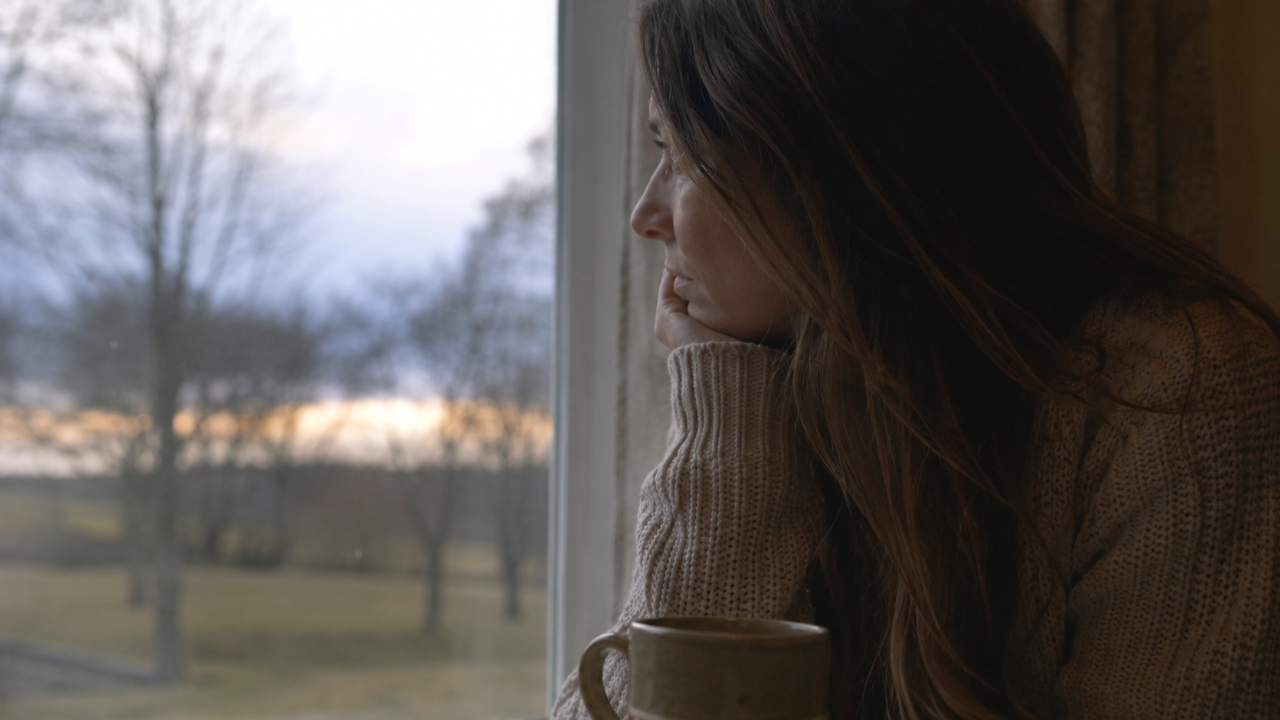
The Formation You Didn't Sign Up For
In Hinds' Feet on High Places, a shepherdess named Much-Afraid sets out on a journey toward the High Places, led by the Shepherd she loves. She expects the journey to be hard. What she does not expect, what nearly undoes her before she has gone any real distance at all, is who she is given to walk with.
Two companions are assigned to her for the climb. Their names are Sorrow and Suffering.
She did not choose them. She would never have chosen them. And for a long stretch of the story, she is convinced that their presence must mean something has gone wrong, that perhaps she has misunderstood the Shepherd, or taken a wrong turn, or that this was never the path after all. It is only much later, when she reaches the place she was being led to, that she understands what Sorrow and Suffering were actually doing the entire time. They were not a detour from her formation. They were the shape it took.
Want to listen instead of read?
WHAT IF THE HARDES...
El Roi: The God Who Sees the Unseen Grief

Hagar was alone in the wilderness when she named God.
Not Abraham. Not Sarah. Not one of the patriarchs whose names we know from a hundred sermons. Hagar, a servant, pregnant and then pushed out, sitting by a spring in the desert with nothing and no one, is the one who looks at God and gives Him a name that no one else in Scripture uses first. El Roi. The God who sees.
She did not name Him that because someone explained His character to her in a teaching series. She named Him that because, in the middle of being unseen by everyone else in her life, she discovered that God had seen her the entire time. Not from a distance. Not in the abstract. He saw her specifically, in her specific wilderness, and He told her so.
That is where this week's episode of A Summer of Sorrows lives, and it is where this post lives too.
Want to listen instead of read?
THE DIFFERENCE BETWEEN ATTENDED TO AND WITNESSED
There is a difference between being attended to and being witnessed, and most of us h...
The Grief That Doesn't Have a Name

There is a particular kind of grief that does not get a name.
Want to listen instead of read?
It is not the grief that comes with a death certificate, a funeral, a sympathy card. It does not come with a meal train. Nobody asks how you are doing in the careful, lowered voice people use for the griefs they recognize. This grief shows up on an ordinary Tuesday, in the middle of an ordinary summer, and it sits down inside you and does not leave. You go to the beach because it is July and that is what you do, and you sit behind your sunglasses, and you watch your children build something in the sand, and the grief sits there with you, unnamed, unwitnessed, and entirely real.
A Summer of Sorrows, the series this blog post grows out of, begins here. Not with a death. With a kind of grief that does not know what season it is. The kind that does not resolve by sundown, or by the next Sunday, or by the time everyone else has moved on to whatever comes next.

THE PSALM THAT DOES ...
What to Do When You Can't Pray — 6 Practices for the Wall
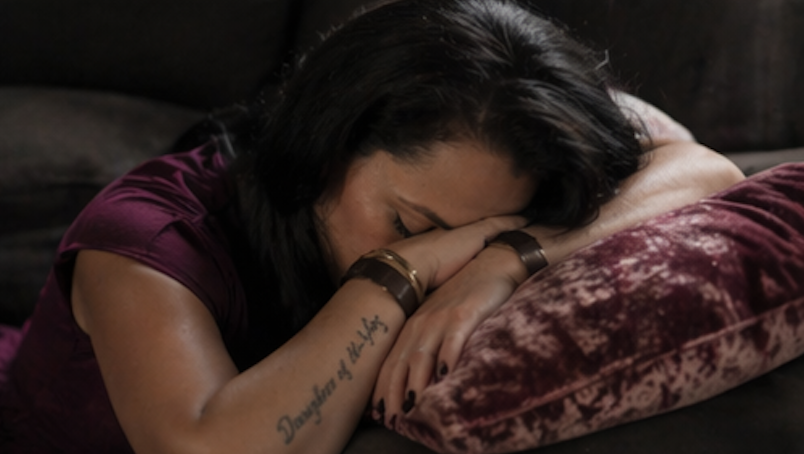
What to Do When You Don't Know How to Pray Anymore
— ✦ —
There is a particular kind of grief that comes with losing the ability to pray.
Not a sudden loss — not the kind that comes from one devastating moment. The slow kind. The kind where you sit down to pray one morning and notice, with a faint alarm, that the words are not there. And then you sit down the next morning and notice the same thing. And then a week passes, and a month, and what was once as natural as breathing has become something you approach with dread — or stop approaching at all.
If you are in that place right now, I want to begin by saying something important:
The inability to pray in the way you once did is not evidence that prayer has stopped being real. It may be evidence that God is inviting you into a different kind of prayer entirely.
Want to listen instead of read?
The contemplative tradition — the stream of Christian spirituality that takes seriously the interior life and the long, often painful...

For the woman in the middle of something hard.
Lament & Light is a podcast for the Christian woman who is still believing, still showing up, and still carrying more than anyone around her knows. Honest faith. Unhurried conversations. No platitudes.
Author

Paris Byrum
Author
Paris Byrum is a spiritual mentor and trauma-informed soul care guide who helps weary hearts heal through biblical wisdom, sacred presence, and soul-deep formation.
Recent Posts